
Saudi Arabia: security at Vision 2030 scale

Across Saudi Arabia, security planning is becoming inseparable from the delivery of major infrastructure and public events. Vision 2030 has expanded the number and complexity of sites requiring protection, while mass gatherings continue to place exceptional demands on crowd monitoring, transport security and command systems. At the same time, localisation rules are changing how international suppliers approach the market, placing greater emphasis on long-term industrial participation rather than equipment sales alone.
Localisation Moves Into The Supply Chain
The clearest measure of that shift is the Kingdom’s localisation programme. The General Authority for Military Industries (GAMI), the Saudi government authority that regulates and develops the military industries sector and oversees areas including licensing and military procurement, reported that the localisation rate of military spending reached 24.89 per cent at the end of 2024, against a target of more than 50 per cent by 2030.
The implications extend beyond domestic manufacturing. By the end of 2024, 572 military licences and permits had been issued across manufacturing, services and supply activities, broadening the industrial base around the sector. International companies entering defence and security markets are increasingly expected to structure localisation into projects from the outset, with GAMI’s Industrial Participation Program covering areas including strategic partnerships, technology transfer, local supply chains, SME participation and specialist workforce development.
For security technology companies, this gives procurement a different rhythm. Surveillance platforms, secure communications, autonomous systems and command technologies may need to be accompanied by local servicing, training, integration or manufacturing capacity. The commercial question is therefore not only whether a technology performs, but how it becomes part of a Saudi ecosystem capable of maintaining and developing that capability over time.
Mass Gatherings Become A Technology Test
Few operating environments illustrate the need for security at scale more directly than Hajj, the annual Islamic pilgrimage to Mecca. In 2026, Saudi Arabia recorded 1,707,301 pilgrims during the Hajj season, including more than 1.54 million arriving from outside the Kingdom.
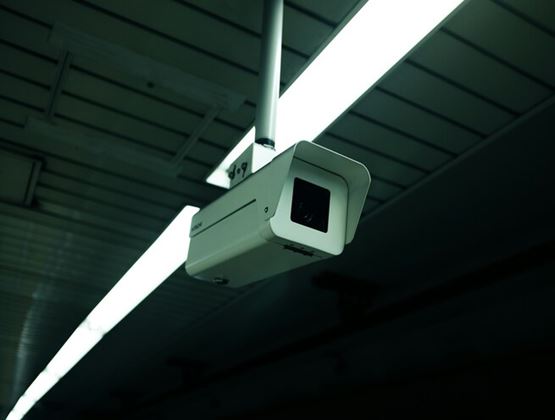
Managing movement on that scale requires more than conventional crowd control. During the 2026 season, the Sawaher platform connected more than 5,000 cameras across 80 locations, supported by 31 dashboards and 16 artificial intelligence algorithms. The system analysed crowd movements and high-density areas through operations centres working around the clock.
That combination of sensors, analytics and operations rooms points towards a wider requirement for interoperable security. Video surveillance has to connect with communications networks, access systems and operational decision-making. Data must move quickly enough to help authorities identify changing conditions, while systems need sufficient resilience to remain available during the periods of greatest demand.
The same requirement applies beyond pilgrimage. Airports, railway systems, stadiums, entertainment venues and urban districts all create environments where crowd density, access management, emergency response and cybersecurity increasingly overlap.
Giga-Projects Expand The Security Perimeter
Saudi Arabia’s giga-project programme adds another layer to the country’s security requirements, although individual projects are progressing at different speeds. The Public Investment Fund (PIF), Saudi Arabia’s sovereign wealth fund, remains closely involved in these developments. Qiddiya City continues to advance west of Riyadh, while NEOM remains active but is undergoing a significant recalibration of its original plans. The wider NEOM region covers 26,500 square kilometres, but high-profile components such as The Line are now being developed through what NEOM describes as a phased, demand-led approach. Independent reporting has also documented a broader scaling back and reprioritisation of the programme.
Development nevertheless continues within parts of NEOM. At Oxagon, its industrial city on the Red Sea, construction began in August 2026 on the first 100 MW of a planned 360 MW first phase of an AI data centre campus. Qiddiya is also progressing, with construction reported to be well underway on the National Tennis Centre at Qiddiya City in June 2026. These projects illustrate how large developments can create security requirements spanning access control, digital infrastructure, surveillance, communications and the protection of transport and utility networks.
Expo 2030 Riyadh presents a different type of challenge. The six-month event, scheduled from October 2030 to March 2031, is planned across a six-million-square-metre site and is expected to receive around 42 million visits. Its scale brings together crowd management, accreditation, transport security, emergency communications, cybersecurity and the monitoring of heavily occupied public spaces.
Such developments encourage a move away from isolated security products towards integrated architectures in which cameras, drones, identity systems, communications networks and analytics can exchange information across large sites. PIF’s 2026 to 2030 strategy places greater emphasis on investment efficiency, domestic economic ecosystems and private-sector participation, reinforcing the importance of security technologies that can be integrated into wider infrastructure programmes rather than deployed as standalone installations.
Doha Brings The Regional Requirement Together
Those priorities provide a natural backdrop to Milipol Qatar 2026, which returns to the Doha Exhibition and Convention Center from 20 to 22 October. The 16th edition also marks 30 years since the event was first held in Doha. More than 250 exhibitors and over 14,000 visitors are expected.
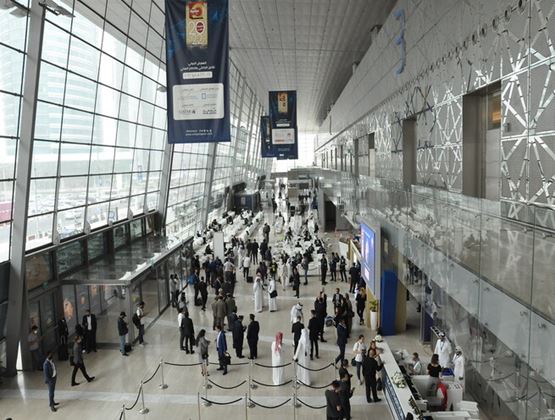
Its scope closely mirrors the technologies involved in Saudi Arabia’s large-scale security requirements, including systems integration, data protection, urban security, transport security, border control, critical-site protection and cybersecurity.
For Gulf security stakeholders, Doha therefore provides a regional setting in which localisation, AI, integrated surveillance and infrastructure protection can be examined against projects that are already moving from planning into long-term operation. Saudi Arabia’s scale makes the requirement particularly visible, but the underlying questions of interoperability, resilience and sovereign capability reach across the region.
Image credits:
Oualid Lakhrouti - Unsplash
Alex Knight - Unsplash