
Oman: securing ports, trade and the logistics economy

Oman faces both the Arabian Sea and the Gulf of Oman, placing much of its coastline close to major shipping routes linking Asia, the Middle East, Africa and Europe.
Salalah is a major city in southern Oman, in the Dhofar Governorate, and home to the Port of Salalah, one of the Sultanate’s principal container and transhipment hubs. Duqm is a coastal city in central Oman’s Al Wusta Governorate, where the Port of Duqm forms part of the larger Special Economic Zone at Duqm, an industrial and logistics development encompassing manufacturing, energy, storage and transport infrastructure.
As Oman develops its logistics economy under Oman Vision 2040, these locations are being reinforced by terminal investment and connected infrastructure. Physical protection, cargo security and digital resilience are becoming more closely linked.
Salalah And Duqm Gather Momentum
Commercial ports handled more than 143 million tonnes of cargo in 2025, while container traffic grew by 22 per cent compared with 2024.
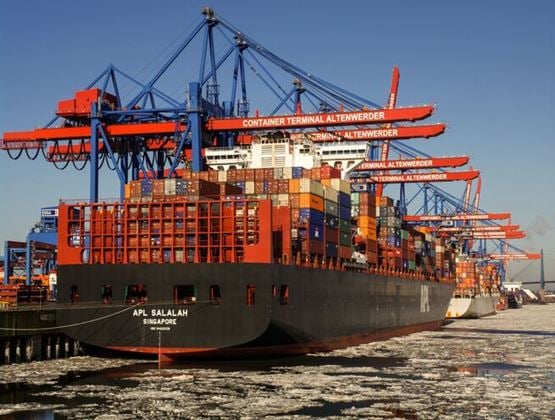
The Port of Salalah accounted for a substantial share of that activity. The port handles local cargo as well as international transhipment, where containers are transferred between ships before continuing towards their final destination.
Salalah recorded 4.3 million TEU and 26.4 million tonnes of general cargo in 2025, including a 31 per cent annual increase in container throughput. One TEU corresponds to a standard 20-foot shipping container, while a 40-foot container usually represents two TEU.
Growth on that scale broadens the security requirement. More containers, vehicles, personnel and vessel calls place greater emphasis on access control, cargo screening, perimeter surveillance and the systems used to coordinate movements across terminals. Modern ports also rely on operational technology controlling cranes, gates and cargo-handling machinery.
Duqm is developing along a different path. The city is being built around the Special Economic Zone at Duqm, with the Port of Duqm acting as its maritime gateway. Its terminals handle containers, dry and liquid bulk, project cargo and vehicles.
By August 2026, Duqm had handled 34,024 roll-on/roll-off units through more than 20 vessel calls, with annual Ro-Ro capacity exceeding 300,000 units. Ro-Ro means roll-on/roll-off, maritime transport designed for wheeled cargo such as cars, lorries, trailers and heavy machinery. Vehicles are driven or towed directly onto specialised vessels rather than lifted aboard by crane.
Maritime Risk Moves Closer To Port Operations
Oman’s position on the Arabian Sea gives Duqm and Salalah direct access to major shipping routes without requiring vessels serving them to enter the Strait of Hormuz. That distinction has gained relevance as maritime conditions around the Gulf of Oman and the Strait have become more demanding.
By 15 September 2026, the International Maritime Organization had verified 80 incidents affecting shipping in the Strait of Hormuz and wider Middle East maritime area. Navigation resilience has also become part of the maritime-security discussion, with advisories reporting significant Global Navigation Satellite System (GNSS) interference, including spoofing and jamming across parts of the Gulf, Strait of Hormuz and Gulf of Oman.
GNSS is the broad term covering satellite-based positioning networks used by ships to determine location and time, including the United States’ GPS and Europe’s Galileo. Jamming can prevent receivers from obtaining a reliable signal, while spoofing can cause equipment to display false positioning information.
Ports and coastal authorities rely on several sources of information. One is AIS, or Automatic Identification System, a maritime tracking system through which equipped vessels automatically transmit their identity, position, course and speed to nearby ships and shore stations.
AIS works alongside radar, coastal sensors and communications networks to support maritime domain awareness, the wider picture of vessel movements and activity in surrounding waters. Combining different systems becomes particularly important when one source of positioning or tracking information is unreliable.
Digital Infrastructure Becomes Port Infrastructure
Oman’s wider digital programme adds another dimension. The National Programme for Artificial Intelligence and Advanced Digital Technologies seeks to expand the use of AI across economic and development sectors, localise advanced technologies and establish governance frameworks for their deployment.
The National Digital Economy Programme aims to raise the digital economy’s contribution to GDP from 2 per cent in 2021 to 10 per cent by 2040. Oman’s 2026 cybersecurity market report also projects domestic cybersecurity expenditure to grow from approximately USD 135 million in 2025 to more than USD 214 million by 2031.
For logistics operators, these trends matter because port digitalisation reaches operational environments. Port community platforms, connected sensors, automated cargo systems, cloud services and industrial control systems can improve efficiency while increasing the importance of cybersecurity and operational resilience.
That approach is also visible in Oman’s Partnership for Development programme, which combines procurement with technology transfer and national capability development. Recent initiatives include specialised equipment for the Royal Oman Police, cybersecurity testing facilities and an Advanced Cyber Excellence Centre at the Military Technological College.
Doha Connects Maritime And Digital Security
These converging requirements give Milipol Qatar 2026 a direct connection with Oman’s evolving security landscape. The exhibition returns to the Doha Exhibition and Convention Center from 20 to 22 October 2026, with sectors covering transport security, port and airport security, border control, sensitive-site protection, communications and cyberthreats.
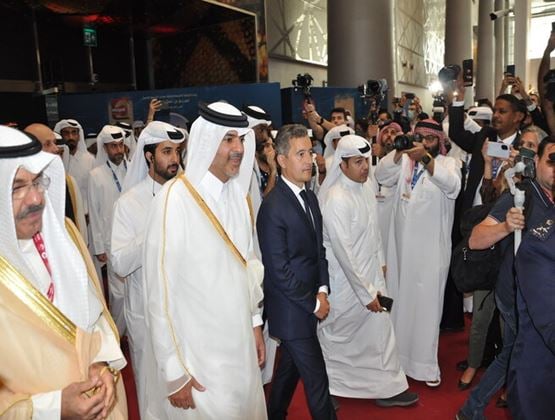
Running alongside it, the second Doha AI Security Summit will examine predictive intelligence, autonomous security systems, cyber-physical resilience, data and responsible AI governance. Those subjects intersect with the requirements of ports such as Salalah and Duqm, where surveillance, vessel tracking, operational technology, communications and cargo management form parts of the same security environment.
The development of Oman’s maritime gateways shows how logistics growth can broaden protection requirements around critical infrastructure. The port gate, terminal control room, shipping lane, coastline and digital network are connected parts of one operational environment.
Image credits:
Wolfgang Weiser - Pexels