
iraq’s security transition

The US-led coalition’s military mission in Iraq concluded on 30 September 2026, following a phased drawdown that has already removed forces from most Iraqi bases. The transition does not end international security cooperation. It changes its form, with bilateral partnerships, advisory missions, training and Iraqi-operated systems assuming greater importance.
For Iraq’s homeland security sector, the requirement is increasingly for connected capability: sensors linked to command centres, secure communications reaching remote areas, digital police systems able to move information quickly, and training programmes that leave skills within Iraqi institutions.
Borders Become A Networked Security System
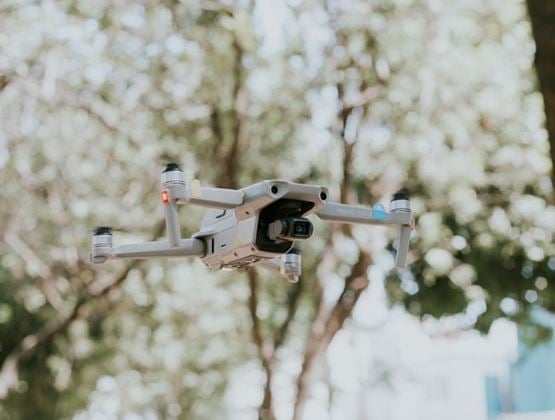
The Syrian frontier illustrates the direction of travel. Iraq’s Ministry of Interior describes the 618-kilometre border as a layered combination of engineering works, surveillance and personnel. By May 2026, the ministry reported 380 kilometres of completed concrete wall, 905 thermal cameras and 1,606 watchtowers, alongside drones and other physical barriers.
Technology is increasingly being tied into command and control rather than deployed as isolated equipment. Ministry reporting describes movement sensors, day-and-night surveillance cameras and fixed-wing electronic aircraft feeding imagery towards national command and Border Forces control centres. A new monitoring and control centre opened in November 2025 to connect border posts with headquarters while integrating thermal cameras and unmanned aircraft.
The requirement therefore extends beyond fencing. Persistent surveillance, resilient communications, data fusion, remote monitoring, interoperable command platforms and maintenance support are increasingly components of the same border-security architecture.
Secure Communications Move Up The Priority List
In January 2026, the US State Department approved a possible Foreign Military Sale of Very Small Aperture Terminals and related equipment to Iraq, with an estimated ceiling of USD 110 million. The proposed package includes VSAT terminals, modems, hubs, L-band tactical satellite manpacks, spares, training and engineering, technical and logistics support.
It builds on an earlier implemented case valued at USD 46 million and is intended to strengthen satellite communications across the Ministry of Defence’s communications infrastructure and command-and-control capability. Two additional US government representatives and five contractor representatives would support the programme in Iraq for five years through reviews, engineering advice, technical assessments and in-country training.
That sustainment component is significant. Iraq’s modernisation increasingly combines hardware acquisition with integration, maintenance and knowledge transfer, particularly where systems need to remain available across large territories and connect multiple institutions.
Police Modernisation Moves From Paper To Platforms
Inside the country, the Ministry of Interior plans to complete the transfer of security responsibilities inside cities to police during 2026, building on responsibility already assumed in several provinces and other areas. The wider direction is towards a more service-oriented model supported by community policing, standard operating procedures and institutional training.
Digitisation is becoming part of daily police work. At Al-Saydiya Model Police Station, an electronic automation system introduced in June 2025 registers cases digitally and sends information to the Police Agency and Interior Ministry information centres. Modernisation also extends into electronic passports, national identity cards and e-visas.
Cybersecurity follows directly from that shift. In March 2026, the Interior Ministry detailed measures to protect the national ID database through secured internal networks, advanced firewalls, AI-based threat detection, encryption, links between the data centre and security operations centre, and periodic penetration testing. Digital public services therefore create a parallel requirement to secure the data and networks on which those services depend.
Training Becomes Part Of The Procurement
Iraq’s capability rebuild is also visible in the way equipment and expertise are acquired together. Interior Ministry personnel were sent to South Korea for training on rescue and firefighting aircraft contracted for Civil Defence, while international programmes continue to support police leadership, crime analysis, integrated border management, forensic skills and secure information exchange.
NATO Mission Iraq remains a non-combat advisory and capacity-building mission working with the Ministry of Defence, Ministry of Interior, Federal Police Command and other Iraqi institutions. Although NATO personnel were relocated from Baghdad to Naples in March 2026 in response to the regional security situation, the mission continues, with areas of work including policy and strategy, force development, resource management and institutional governance.
European advisory activity follows a similar institutional approach. Iraqi officials have worked with Frontex on integrated border management, with INTERPOL on secure international information exchange, and with European police experts on strategic leadership and crime analysis. Technology transfer in this setting is consequently as much about procedures, training and institutional capacity as equipment itself.
Doha As A Capability Marketplace
Milipol Qatar 2026 takes place from 20 to 22 October at the Doha Exhibition and Convention Center, less than a month after the scheduled coalition withdrawal. Its business areas include information and communication systems, systems integration, civil defence, law enforcement, perimeter security, urban security, border control and the fight against cybercrime.
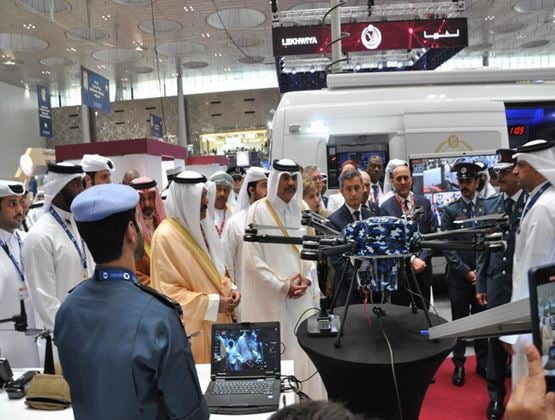
The second Doha AI Security Summit will run alongside the exhibition, with subjects including predictive intelligence, cyber-physical resilience, critical infrastructure protection and autonomous security systems. For Iraqi institutions, the timing places Doha within a period in which long-term ownership, integration and skills transfer are becoming central to security modernisation.
Image credits:
Muhammad Nabeel - Pexels
Amar Preciado - Pexels