
Egypt’s security priorities come together

Egypt’s security landscape is being shaped by two connected forms of infrastructure. One is highly visible: ports, airports, public facilities, borders and the Suez Canal. The other is digital, running through smart-city platforms, command centres, communications networks and cyber defence. Together, they are changing demand from isolated equipment towards systems able to connect sensors, operators and decision-making across complex environments.
A Security Market Moving Towards Integration
Egypt’s safety and security market is expected to expand by 15 to 20 per cent over the next few years, supported by upgrades across airports, seaports, prisons and public facilities. Current opportunities include advanced surveillance, border and perimeter control, cybersecurity and police communications, while modernisation programmes are replacing older platforms with newer capabilities, including unmanned aerial vehicles.
The requirement is increasingly broader than a single device. Border surveillance, public-space monitoring and critical-infrastructure protection depend on communications, analytics and command-and-control layers that can bring multiple streams of information together. The Ministry of Interior remains a key buyer for internal security and border-control requirements, while the Egyptian Procurement Office is among the bodies involved in defence and security procurement.
Interoperability therefore carries growing weight. Cameras, unmanned systems, sensors and secure communications become more useful when linked into an operating picture that functions across different agencies, terrains and levels of command.
Suez as Security Infrastructure
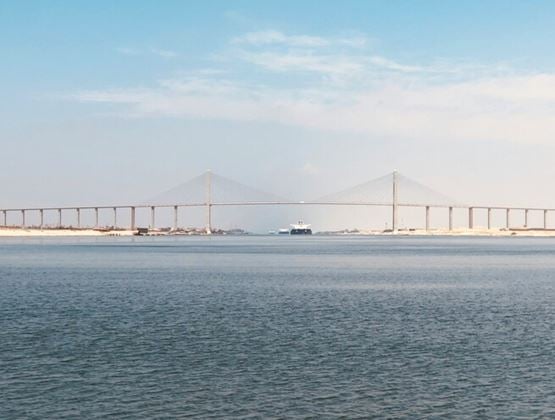
Early 2026 data pointed to a measured recovery. During the first half of fiscal year 2025/2026, vessel numbers rose by 5.8 per cent year on year, net tonnage increased by 16 per cent and revenues by 18.5 per cent. By 8 February 2026, 1,315 vessels had passed through the canal since the start of the year, generating USD 449 million.
For security planners, the corridor extends beyond the waterway. Ports, terminals, approaches, coastal facilities and the Red Sea route create a chain of assets requiring maritime awareness, perimeter protection and reliable communications. On land, Egypt’s long borders and the geography of the Sinai Peninsula favour persistent surveillance and technologies able to cover wide areas with limited physical presence.
Unmanned platforms, electro-optical sensors, radar, secure communications and integrated control systems consequently address the same strategic need: maintaining visibility across an extended corridor without treating each site as a separate security environment.
Cities Become Security Networks
Egypt’s urban transformation adds another layer. The National Smart Cities Strategy, launched in September 2025, places digital infrastructure, fibre networks, artificial intelligence, Internet of Things technologies and centralised data systems within the country’s approach to urban development. Its broader plan encompasses around 24 new urban centres.
The New Administrative Capital indicates the scale involved. Its government district command and technical-support infrastructure includes 6,800 network devices across 953 assembly rooms, more than 22,000 wireless stations, 14,000 surveillance cameras and 114 electronic gates. A centralised mechanism monitors performance, identifies faults and supports continuity across government services.
Such environments change the meaning of urban security. Video surveillance becomes part of a wider data architecture, while access control, network monitoring, communications resilience and incident response begin to converge. Security increasingly becomes part of the city’s operating fabric rather than a standalone layer.
Cyber Resilience Meets Physical Protection
That convergence also explains the growth of cybersecurity demand. Egypt’s cybersecurity market has been projected to grow at a compound annual rate of 15.54 per cent between 2025 and 2029. The National Cybersecurity Strategy 2023-2027 places critical-infrastructure resilience, governance, standards and capacity-building among its priorities.
Egypt was placed in Tier 1 of the International Telecommunication Union’s 2023-2024 Global Cybersecurity Index. For airports, ports, smart cities and command centres, the distinction between physical and digital risk is narrowing. Surveillance networks, access-control systems and communications platforms depend on the resilience of the digital environment supporting them.
Doha Brings the Priorities Together
Milipol Qatar returns to Doha from 20 to 22 October 2026 for its 16th edition and 30th anniversary. Its sector coverage includes urban security, transport security, port and airport security, border control, critical-site protection and cyberthreats, closely matching areas in which Egypt is modernising capability.
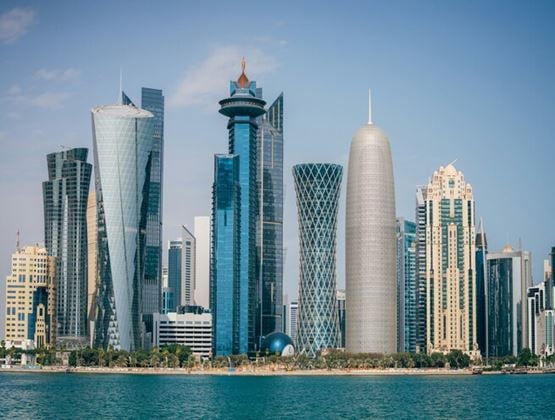
The second Doha AI Security Summit will run alongside the exhibition, focusing on predictive intelligence, autonomous security systems, cyber-physical resilience and responsible AI governance. More than 250 exhibitors and over 14,000 visitors are expected, creating a regional setting in which public authorities, technology providers and security specialists can examine how individual technologies are becoming connected operating systems.
Across city streets, desert borders and the Suez corridor, the underlying requirement is increasingly consistent: better visibility, faster coordination and infrastructure able to keep functioning under pressure. Milipol Qatar 2026 offers a timely view of technologies being developed around those needs, while the wider Milipol Network, including Milipol Paris, connects that conversation to the international homeland-security market.
image credits:
samuel hanna - Unsplash
Visit Qatar - Unsplash
Tamer Soliman - Pexels