
WARNING AT SCALE

For emergency authorities, knowing that a hazard is approaching is only the beginning. The effectiveness of an early warning system depends on whether information can move rapidly from sensors and forecasting centres through government decision-making structures and into the hands, homes and streets of communities at risk.
That chain is receiving greater international attention as the United Nations' Early Warnings for All initiative approaches its 2027 target. The initiative aims to ensure that every person on Earth is protected by life-saving early warning systems for hazardous weather, water and climate events.
Progress is visible. In 2025, 119 countries, representing 60 per cent of all countries, reported having a multi-hazard early warning system, more than double the number a decade earlier. However, gaps remain, particularly among small island developing states, where only 43 per cent reported such systems.
From Detection to Action
Modern multi-hazard early warning brings together functions once treated as separate domains. Disaster risk information identifies exposed populations and infrastructure. Observation networks, sensors and forecasting systems determine what is happening and what may happen next. Warning platforms distribute information, while civil protection and emergency services translate it into action.
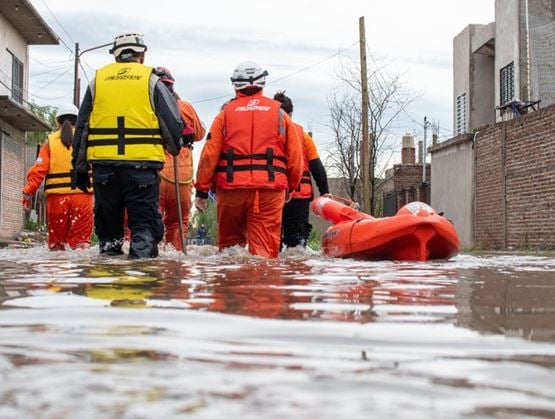
The Early Warnings for All framework reflects this through four connected pillars: disaster risk knowledge; detection, observation, monitoring, analysis and forecasting; warning dissemination and communication; and preparedness and response.
The human and economic case is considerable. The UN World Meteorological Organization (WMO) estimates that countries with limited to moderate multi-hazard early warning coverage have a disaster-related mortality ratio almost six times higher than countries with substantial to comprehensive coverage. Providing 24 hours of notice before a storm or heatwave can reduce potential damage by around 30 per cent.
This makes early warning as much a homeland security and resilience issue as a meteorological one. Floods, wildfires, storms, earthquakes and industrial accidents may require different detection technologies, but authorities face a common challenge: converting complex information into a timely decision and reaching affected populations.
The Last Mile Goes Multi-Channel
Mobile networks have transformed that final stage. More than 98 per cent of the world's population is covered by a mobile network, giving authorities an infrastructure capable of delivering warnings at enormous scale. Cell broadcast is particularly significant because it can simultaneously transmit a short message to compatible devices connected to selected mobile cells within a defined geographical area.
Geolocation allows alerts to target populations inside an affected zone rather than broadcasting indiscriminately across an entire country. This can be valuable when incidents are highly localised or when evacuation instructions differ between areas.
France's FR-Alert system illustrates this layered approach. It combines cell broadcast with location-based SMS and complements an existing national alert infrastructure that includes more than 2,000 remotely activated sirens, television and radio broadcasts and institutional social media communications.
No single channel provides complete resilience. Sirens can reach people outdoors without requiring a mobile device, while radio and television remain useful during prolonged emergencies. Mobile alerts can provide detailed shelter or evacuation instructions, while digital platforms can distribute updates as an incident develops.
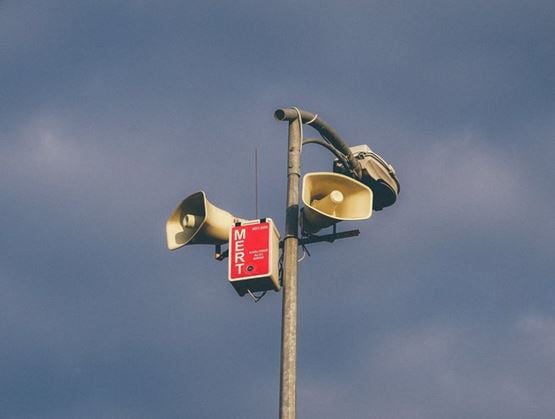
Behind these channels, the Common Alerting Protocol provides a standard format through which the same authoritative warning can be distributed across different communication systems, reducing the risk of inconsistent messaging.
Tsunami Warning Shows the Challenge
Few hazards demonstrate the importance of speed and coordination as clearly as a tsunami. UNESCO's global tsunami architecture uses seismic and sea-level monitoring, national warning centres and regional Tsunami Service Providers to detect potential events and distribute threat information. National authorities remain responsible for issuing warnings to populations within their territories.
Initial tsunami warnings may be issued from seismic information before a destructive tsunami has been confirmed, with later measurements used to adjust, downgrade or cancel the alert.
Technology is also adapting to less conventional threats. UNESCO's Ocean Decade Tsunami Programme is working towards an all-sources tsunami early warning system by 2030, partly because some tsunamis are generated by volcanoes, landslides or atmospheric disturbances rather than earthquakes.
Detection alone, however, is insufficient. UNESCO's Tsunami Ready programme also emphasises risk mapping, evacuation planning, public education, exercises and redundant methods for receiving and disseminating official warnings around the clock.
Command, Communication and the 2027 Goal
As warning networks become more interconnected, command-and-control platforms increasingly sit at the centre of the process. Authorities need to combine sensor information, forecasts, geographical risk data and operational intelligence, determine which populations are exposed and activate the most appropriate communication channels.
Early warning is also relevant beyond natural hazards. Missile attacks, drone incursions, air raids and chemical, biological, radiological and nuclear (CBRN) incidents can require similarly rapid chains between detection, assessment and public alerting. In these scenarios, radar, military or security sensors and intelligence feeds may feed into civil warning systems, while sirens, cell broadcast and geolocated alerts communicate shelter or evacuation instructions. The compressed timelines involved place particular emphasis on automated data exchange, resilient command-and-control and clear coordination between defence, emergency services and civilian authorities.
The value of these platforms lies not simply in gathering more data, but in shortening the path between detection, decision and public action. Geospatial tools can help visualise impact areas, while integrated command systems can support coordination between meteorological services, emergency operators, police, fire and rescue services, local authorities and telecommunications providers.
Warning messages themselves are part of the system. They must be authoritative, understandable and actionable, while also accounting for language, accessibility and the needs of vulnerable groups. The technology delivering an alert may operate within seconds, but its purpose is lost if recipients do not understand what has happened or what they should do next.
WMO reported in October 2026 that more than 50 countries were advancing Early Warnings for All, with national roadmaps increasingly being used to identify capability gaps, investment requirements and time-bound actions.
Universal coverage will therefore depend on more than installing sensors or purchasing sirens. It requires resilient telecommunications, interoperable alerting standards, geospatial technologies, secure command-and-control, trusted public communication and communities prepared to respond.
These technologies sit increasingly close to the wider homeland security ecosystem represented at Milipol Paris, where civil protection, communications, crisis management, critical infrastructure and public safety capabilities converge. As early warning moves towards a more integrated and multi-hazard model, the ability to turn information into coordinated action will remain central to public security resilience.