
Heatwaves, Fires... Protecting People and Infrastructures

The heatwave affecting Europe has pushed heat into the centre of security planning. Since 20 June, several countries have faced temperatures around or above 40°C, with France alone reporting over 1,200 excess deaths during the most intense period and warning that the toll may rise. The World Meteorological Organization described the episode as a widespread and intense late-June heatwave, with impacts on health, ecosystems, agriculture, infrastructure and labour productivity.
Unlike floods or storms, heat does not always look like an emergency. It accumulates quietly. It weakens the body, strains hospitals, raises energy demand, disrupts work and exposes the limits of buildings, roads, railways and power systems designed for a cooler climate.
France’s decision to keep its ORSAN plan at its highest level after the heatwave reflects a broader European shift in the way extreme temperatures are managed. ORSAN, France’s national health emergency response system, is designed to organise hospitals, emergency services and regional health agencies during exceptional health crises, from epidemics and mass-casualty events to climate-related pressure on healthcare capacity. Across Europe, similar heat-health alert systems, cooling measures and emergency planning tools are becoming part of the continent’s wider resilience architecture as governments adapt to longer, more intense periods of heat.
Protecting People Before the Emergency Peaks
The first priority is the protection of people most exposed to heat risk. Older residents, infants, people with chronic illness, outdoor workers and those living in poorly insulated homes are often the first affected. WHO/Europe recommends heat-health action plans that bring together health services, social care, local government, emergency responders and non-health actors, with early warnings, public communication, protection of vulnerable groups and post-event evaluation.
Recent measures across Europe show how varied the response must be. France closed or adapted timetables in 13,500 schools during the heatwave, while around 1,000 schools in England and Wales also closed or shortened the day. Such decisions are not only about education. They involve transport, building safety, staffing, hydration, parental care and the capacity of local authorities to adjust routines before heat becomes dangerous.
Cooling centres are becoming a practical tool for urban resilience. Hungary reportedly activated more than 2,000 cooling centres as the heat moved east across Europe. Berlin has also developed a heat protection portal with a heat-health plan, behavioural guidance and a map of cool places. These measures are useful only when people know where to go, can reach the facilities and trust the information they receive.
Extreme heat has also entered the field of public order. A 2024 systematic review and meta-analysis found that a 10°C increase in short-term temperature exposure was associated with a 9% increase in the risk of violent crime, while the link with property crime was far less consistent. Other urban studies have found similar patterns, including research in Los Angeles showing that days above 29.4°C were associated with a 2.2% increase in overall crime and a 5.7% increase in violent crime, with stronger effects in lower-income neighbourhoods. For public safety agencies, this does not mean heat causes crime in a simple or automatic way. It does suggest that heatwaves can amplify existing social pressures, especially in dense urban areas where overcrowding, poor housing, limited green space and reduced access to cooling already shape vulnerability.
In France, the response went beyond health advice and entered the field of police powers, with prefectural authorities imposing temporary bans on public alcohol consumption and takeaway alcohol sales in Paris to reduce avoidable medical emergencies and pressure on hospitals. During the same heatwave, France also restricted alcohol at public events in red-alert areas, postponed or cancelled some outdoor gatherings, and reinforced surveillance around bathing sites and aquatic areas, where heat often pushes people towards higher-risk behaviour.

Similar measures appeared elsewhere in Europe, with Spain closing a football fan zone and cancelling sporting events as temperatures rose, while several countries suspended classes, postponed outdoor events and adjusted work rules during the hottest hours. These measures show how heatwaves now require police, municipal authorities, civil protection agencies and health services to manage behaviour, crowd density and emergency-service demand as part of the same resilience operation.
Infrastructure Under Thermal Pressure
Extreme heat also tests the physical limits of infrastructure. Rail tracks can buckle, road surfaces can soften, electrical systems can overheat and power plants can be affected by warmer water sources. During the latest heatwave, Reuters reported reduced train services in Germany, pressure on transport networks and lower output at Hungary’s Paks nuclear plant because of high river temperatures. The Guardian also reported buckled tram tracks in Germany and emergency outages in Ukraine amid strong demand and a weakened grid.
These incidents show how heat can create cascading risk. A stressed electricity grid affects cooling, hospitals, water pumping, telecommunications and transport control. A rail disruption can affect commuters, emergency staffing and supply chains. Water stress can hit agriculture, industry and power generation at the same time. In Italy, conditions on the Po River during the heatwave allowed seawater to move inland, threatening agriculture and wetlands.
Protecting infrastructure therefore requires more than emergency repairs. It requires heat-conscious design and maintenance. This can include reflective surfaces, shaded public spaces, heat-resistant materials, vegetation, backup cooling for hospitals and data centres, protected substations and operating protocols for transport networks during high temperatures.
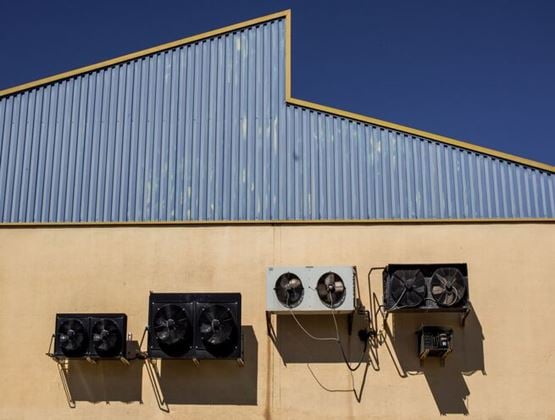
Investment is beginning to follow the risk. France’s state-owned utility EDF pledged €80 million for cooling systems in schools and day-care centres during the heatwave. However, cooling itself must be managed carefully. If it depends only on inefficient air conditioning, it can increase peak electricity demand and deepen grid stress. UNEP’s Cool Coalition promotes sustainable cooling that combines passive design, efficient equipment and access to cooling for vulnerable communities.
Lessons from Hotter Climates
Hotter regions, including parts of the Middle East, offer useful lessons because heat resilience has long been part of urban life. District cooling is one example. In Dubai and the wider MENA region, centralised cooling systems supply chilled water to multiple buildings, reducing dependence on individual air-conditioning units. The Cool Coalition notes that Dubai aims for 40% district cooling penetration by 2030, with such systems able to reduce electricity consumption by up to 50% compared with conventional cooling in suitable settings. For dense districts, hospitals, campuses, airports and business zones, this approach can make cooling more efficient and easier to manage.
Other lessons are simpler: shade, tree cover, cool roofs, reflective pavements, ventilation corridors and heat-sensitive urban planning. The World Resources Institute’s Cool Cities Lab, launched in 2026, helps cities model how trees, shade structures and cool roofs can reduce local heat stress and air temperatures. This matters because heat risk is intensely local. One street can be hazardous while another nearby, with shade and airflow, remains usable.
Extreme heat is becoming a test of preparedness, coordination and design. It asks whether authorities can warn early, protect the vulnerable, keep infrastructure running and adapt cities without leaving poorer communities more exposed. For the security community and Milipol Paris, the issue belongs naturally alongside civil protection, crisis management and critical infrastructure resilience. The next generation of homeland security will not only defend borders, networks and public spaces. It will also help societies function when the weather itself becomes operationally hostile.
Image credits:
Faith Turan - Pexels
Toni Cuenca - Pexels
Victor Moragriega - Pexels