
THE SECURITY BATTLE BEHIND STOLEN HERITAGE

In a single international operation, authorities seized 37,727 cultural objects and made 80 arrests across 23 countries. Archaeological pieces, artworks, coins and musical instruments all formed part of the haul. The scale of Operation Pandora IX, which took place throughout 2024, offers a useful reminder that illicit trafficking in cultural property is not simply a question of stolen masterpieces or isolated museum thefts. It is a cross-border security issue involving organised crime, online marketplaces, customs enforcement and international police cooperation.
That wider threat picture is changing the way cultural heritage is protected. Security no longer begins and ends at the museum door. It stretches from perimeter surveillance and access control to cyber investigations, border checks, shared databases and intelligence exchange. In practice, a stolen object can pass through several jurisdictions, appear on an e-commerce platform and reach a customs checkpoint before its origin is questioned.
In France, the issue has taken on renewed importance. Following the October 2025 burglary at the Louvre, cultural institutions and public authorities have stepped up work on surveillance, governance and intrusion prevention, reinforcing a broader approach to heritage protection. While museums are not directly comparable with airports, transport hubs or stadiums, they face a similar balancing act: protecting people and valuable assets while remaining open, accessible and able to accommodate large visitor flows.
Against this backdrop, UNESCO’s International Day against Illicit Trafficking in Cultural Property on November 14 highlights a field that now sits firmly within the broader homeland security conversation. UNESCO established the observance in 2019 to draw greater attention to theft, looting and illicit trade, as well as to the importance of international cooperation in combating them.
From cultural object to criminal commodity
The romantic image of the lone art thief has little place in this picture. Illicit trafficking in cultural property is increasingly treated as part of a wider organised-crime ecosystem, where stolen or illegally excavated objects can move through brokers, intermediaries, online marketplaces and cross-border networks before re-entering apparently legitimate channels.
INTERPOL describes trafficking in cultural property as a “low-risk, high-profit” criminal activity with links to organised crime. Objects may originate from museum thefts, illegal archaeological excavations, places of worship or private collections before moving through a mixture of illicit and apparently legitimate channels.
That overlap makes enforcement particularly difficult. UNESCO notes that illicitly traded cultural property may circulate through illegal markets but also through auctions and online platforms. Provenance can be unclear, documentation can be incomplete and an object may have passed through several owners before attracting the attention of authorities.
Pandora IX shows just how digital this market has become. Dedicated cyberpatrols during the operation resulted in the seizure of 4,298 cultural objects and the opening of new investigations. In Spain, archaeological material looted from protected sites was being sold through social media. In Italy, more than 300 objects, including Roman and Punic-period material, were discovered after being offered on e-commerce platforms.
The response therefore increasingly overlaps with other areas of modern policing. Investigators must monitor online marketplaces, analyse digital evidence, trace networks across jurisdictions and connect discoveries made on the ground with information held elsewhere.
Borders Become Part of the Protection System
For customs officers, a cultural object can present a very different detection problem from drugs, weapons or counterfeit goods.
An ancient coin may be small enough to fit in a pocket. A religious icon may travel inside ordinary luggage. Archaeological fragments can be difficult for a non-specialist to distinguish from legitimate possessions. The challenge is not simply finding an object, but recognising that it may require further scrutiny.
During Pandora IX, Ukrainian customs authorities intercepted 87 cultural goods being transported illegally towards Poland, Moldova and Romania. Spanish authorities separately stopped a passenger travelling from Palma de Mallorca to Germany with 55 ancient coins and a ring. The subsequent investigation led to the confiscation of 64 objects of historical value and 1,576 ancient coins.
Technology can turn that initial suspicion into something more actionable.
INTERPOL’s Stolen Works of Art Database contains descriptions and images of almost 57,000 stolen or missing objects supplied through authorised law-enforcement and international partners. Investigators can also use image-matching software to compare a photographed object against entries in the database.
Its ID-Art application brings part of that capability onto a mobile device. Police officers and customs officials can conduct manual searches or photograph an object and use visual recognition to identify possible matches. The same application can also be used to document threatened cultural sites and report suspected illicit excavations.
Pandora itself relies on this broader networked approach. The latest operation was coordinated by the Spanish Guardia Civil with operational support from Europol, INTERPOL and the World Customs Organization. Europol supported investigations and information exchange, INTERPOL coordinated cross-border activity and provided access to its heritage-protection tools, while the WCO made its secure CENcomm communication system available to participants.
The model is familiar from other transnational security threats. A seizure made by one officer at one border becomes considerably more useful when it can immediately be connected to information held elsewhere.
Improving the Museum Perimeter
The other end of the chain is the place from which the object disappears.
The Louvre burglary of October 19, 2025 demonstrated how quickly a cultural institution can become the focus of a wider security debate. Thieves entered the Galerie d’Apollon using a mechanical ladder mounted on a vehicle, broke into display cases and escaped with historic jewellery. One crown was recovered at the scene, while eight other pieces were subsequently added to INTERPOL’s Stolen Works of Art Database.
The French response has extended well beyond the investigation itself. A Ministry of Culture administrative review confirmed that alarms had operated and staff had followed established procedures, while also setting out areas where protection could be further strengthened. The measures announced include additional perimeter cameras, an anti-intrusion audit, updated protocols and dedicated training for security personnel, alongside a broader review of security governance.
The Louvre also announced plans for 100 additional external cameras by the end of 2026 and closer cooperation with Paris police, including a police facility within the museum grounds.

France has since widened the discussion. In July 2026, the Ministry of Culture published a national action plan for the security of heritage institutions and locations holding cultural property. The plan includes 33 measures intended to strengthen risk culture and improve protection across the sector.
This is where museum security increasingly meets the language of homeland security. Perimeter protection, video surveillance, intrusion detection, access management, staff preparedness and crisis governance are no longer isolated technical functions. They form layers of a single protection strategy.
Connecting the Physical and Digital Response
Museum theft is only one route into the illicit cultural property market. Trafficking can also begin with illegal excavations, looting at archaeological or religious sites, theft from private collections, or the removal of objects from conflict-affected areas.
Operation Pandora IX illustrates that wider picture. Alongside artworks and museum objects, authorities seized archaeological material and confiscated 69 metal detectors and 23 tools commonly used in illegal excavations. In the Spanish province of Cáceres, the Guardia Civil dismantled a group suspected of looting protected archaeological sites, recovering around 2,500 objects, mainly Roman coins, that had subsequently been offered for sale through social media.
Conflict adds another layer of vulnerability. INTERPOL notes that armed conflict can be accompanied by organised looting and the illicit sale of objects forming part of a country's heritage. UNESCO has similarly highlighted the exposure of museums, archaeological sites and private collections in conflict zones, where cultural property may be dispersed across borders and subsequently appear on international markets.
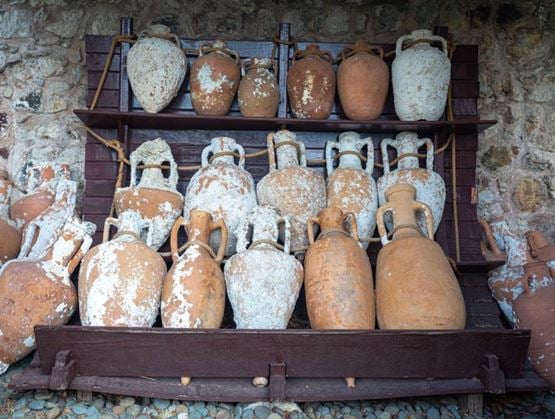
The threat also extends beneath the surface. Shipwrecks and other forms of underwater cultural heritage face risks including plunder and illicit commercial exploitation. Pandora IX included an investigation in Spain involving suspected plundering of underwater wrecks as well as archaeological sites, demonstrating how enforcement can span land, sea and border controls within the same trafficking chain.
Once removed from its original location, cultural property can move quickly into digital channels.
UNESCO has identified online platforms and social media as an increasingly important part of the trafficking environment. Their speed, global reach and relative anonymity can allow objects to be advertised far beyond their country of origin, sometimes alongside legitimate antiques and collectables. The organisation has called for stronger cooperation with technology companies as enforcement agencies adapt to this digital marketplace.
This is also why provenance, documentation and data-sharing matter. Identifying whether an object has been stolen, illicitly excavated or illegally exported can require information from several countries and institutions. UNESCO's 1970 Convention provides the principal international framework for preventing the illicit import, export and transfer of ownership of cultural property, while organisations including INTERPOL, Europol and the World Customs Organization provide operational channels for law enforcement cooperation.
Police and customs need access to cultural expertise. Museums and archaeological authorities need channels for rapidly reporting missing objects. Market professionals and online platforms can help identify suspicious sales, while international organisations provide the databases and communications networks that connect national investigations.
UNESCO's International Day against Illicit Trafficking in Cultural Property highlights this broader ecosystem. The issue is not simply how to stop an object disappearing from a museum. It is how to prevent cultural property from being looted in the first place, detect it as it moves, identify it when it appears for sale and connect information quickly enough to intervene.
For the security community around Milipol Paris, that makes cultural property trafficking a particularly relevant example of modern transnational crime. The routes may begin at an archaeological site, a conflict zone, a wreck or a museum, but the response increasingly depends on the same combination of intelligence, border security, digital investigation and international cooperation found across the wider homeland-security landscape.