
Strengthening UK-Qatar defence ties

For the United Kingdom, Milipol Qatar 2026 offered more than an opportunity to present new defence and security technologies. The exhibition provided a meeting point for a relationship that has developed over decades, bringing British industry and government representatives together with Qatari and regional stakeholders at a time of continuing defence modernisation.
In an interview leading up to Milipol Qatar, Major General Toby Lambert OBE, Senior Military Advisor to National Armaments International at the Ministry of Defence, described Qatar as “a valued strategic partner for the UK”, recognised for its investment in defence modernisation, operational excellence and its ambitions for future capability development.
“UK companies are highly regarded in Qatar for their expertise, innovation and proven track record of delivery,” he said.
Against that background, the British presence in Doha was focused as much on dialogue and long-term cooperation as on individual technologies. According to Lambert, attending Milipol Qatar provided “an excellent opportunity to deepen engagement with Qatari and regional stakeholders, strengthen existing relationships and establish new partnerships across the security and defence sectors”.
From Technology To Partnership
Direct access to government, military and industry decision-makers remains an important part of international security exhibitions, particularly as countries seek capabilities that can operate alongside existing national and allied systems.
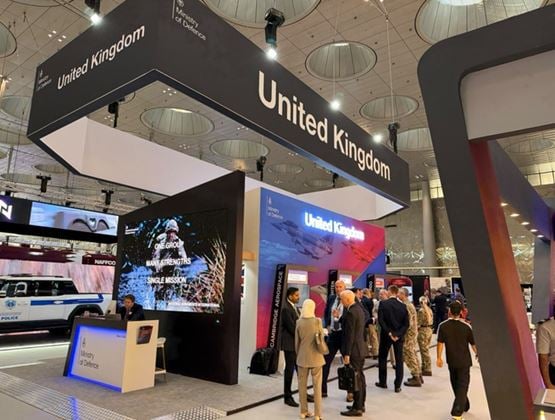
For Lambert, Milipol Qatar enabled that dialogue while giving UK organisations a platform to showcase new technologies and discuss collaborative responses to shared security challenges. He believes the British presence also reinforced “the UK’s long-term commitment to supporting Qatar’s security ambitions, further strengthening an already close and enduring partnership”.
That presence was concentrated around the UK MOD Pavilion, where companies presented technologies covering a broad spectrum of contemporary defence and homeland security requirements.
“We have a fantastic range of UK companies exhibiting on the UK MOD pavilion, showcasing cutting-edge solutions and leading UK defence and security expertise,” Lambert said.
The capabilities presented in Doha spanned aerospace, emergency response, intelligence, surveillance and reconnaissance, counter-uncrewed aerial systems, protective security and digital technologies.
Rather than existing as isolated areas of development, these capabilities increasingly intersect. Surveillance can inform emergency response, digital systems underpin intelligence gathering, while the proliferation of uncrewed aircraft has created new protective security requirements for military sites, critical infrastructure and public spaces.
Lambert said the technologies demonstrated “how UK industry is helping address complex security challenges through innovative and operationally proven solutions”.
A Defence Relationship Built Over Decades
Behind the technology on display sits a broader bilateral relationship. Lambert characterises UK-Qatar defence cooperation as “strong, trusted and forward-looking”, built on decades of close cooperation, shared security interests and a commitment to regional stability.
The partnership received further political impetus during the State Visit of His Highness Sheikh Tamim bin Hamad Al Thani to the United Kingdom in 2024. According to Lambert, the visit highlighted “the depth and breadth of the strategic partnership between our two nations”.
Defence modernisation remains an important element of that relationship. Qatar has invested in developing its military capabilities while pursuing what Lambert describes as an “ambitious vision for future capability development”.
The relationship is therefore not limited to equipment acquisition. Sustained dialogue, military cooperation and industrial collaboration provide avenues through which both countries can explore further defence engagement and shared security priorities.
For the UK, this also reflects a wider approach in which international partnerships are increasingly connected to questions of interoperability, technology exchange and the ability of allied nations to develop and sustain capabilities together.
Creating A Gateway For International Cooperation
Within the Ministry of Defence, Lambert highlighted the role of the National Armaments Director Group in bringing together the different elements required to turn technology and procurement priorities into operational capability.
“The MOD’s National Armaments Director Group brings together expertise across science, technology, procurement, infrastructure and support to accelerate the delivery of military capability for the Armed Forces and international partners,” he explained.
Bringing these functions together is intended to strengthen the UK’s ability to deliver what Lambert describes as “effective, coherent and responsive capability at pace”.
International cooperation forms part of that structure. The National Armaments International team serves as a gateway for armaments cooperation, giving partner nations a single, coordinated point of engagement with the UK.
That coordination becomes particularly significant as defence programmes grow more technologically complex and multinational. Modern capabilities increasingly depend upon countries being able to operate together, exchange technologies and establish common approaches to procurement, development and sustainment.
“We recognise that collaboration, technology exchange and the promotion of interoperability with our allies helps to strengthen defence partnerships, unlock export opportunities and support multinational programmes,” Lambert said.
Such cooperation, he added, enables nations “to develop, deliver and sustain capabilities together, enhancing collective security and shared operational effectiveness”.
Beyond The Exhibition Floor
Milipol Qatar 2026 provided a practical setting for those ambitions. The technologies displayed on the UK pavilion illustrated the range of capabilities available from British industry, but Lambert’s emphasis extended beyond individual systems.
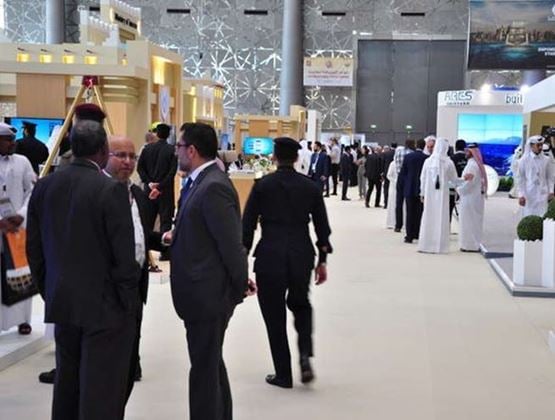
The recurring themes were relationships, interoperability and the ability to translate innovation into capability alongside international partners. For Qatar and the UK, that approach builds upon an established defence relationship while creating space for cooperation around emerging security requirements.
The discussions in Doha and the wider Milipol Network also reflected a wider reality for the international security community. As threats cross borders and technologies develop rapidly, governments, armed forces and industry are increasingly required to work across traditional institutional and national boundaries.