
Strengthening Europe’s Cross-Border Operational Readiness

Held at Europol headquarters in The Hague, the four-day scenario-based exercise tested the ability of participating agencies to conduct coordinated multinational surveillance, execute seamless cross-border handovers and transition rapidly from covert monitoring to tactical intervention.
Two Parallel Scenarios, one Operational Objective
The exercise simulated two intersecting operations, each unfolding simultaneously across several European countries. Both scenarios were designed to replicate realistic security challenges currently facing the European Union: organised drug trafficking networks and hybrid threats targeting critical infrastructure.
The main objective was to maintain continuous cross-border surveillance of several high-value targets, referred to as “tangos”, while ensuring secure information sharing and smooth operational coordination between the national units involved.
Operation Shamrock: Tracking Cross-border Drug Trafficking
The first scenario, codenamed Operation Shamrock, began in Ireland and followed individuals suspected of travelling across Europe to procure narcotics using cryptocurrency transactions.
Surveillance teams monitored the targets as they flew to Amsterdam, met suspected traffickers, and continued their movements across Rotterdam before driving into France. The tangos stopped in Amiens and Rouen before boarding a ferry from Cherbourg to Dublin. Throughout the operation, surveillance responsibilities were handed over between national teams in real time, requiring precise coordination and trust between agencies.
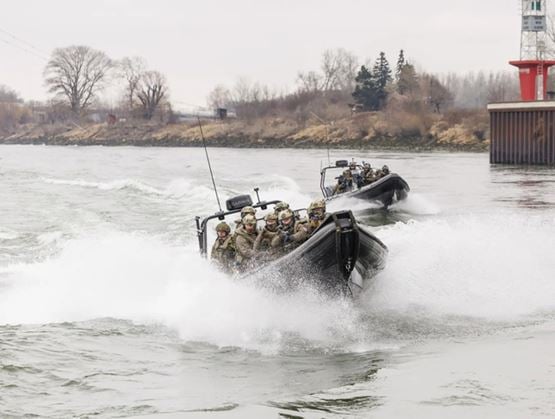
Upon their return to Ireland, the suspects were followed to a warehouse facility, where a special intervention unit executed the arrest phase. The scenario tested not only operational tracking capabilities but also the secure management of intelligence flows across borders.
Operation Cargill: Countering Hybrid Threats
Running in parallel, Operation Cargill focused on individuals suspected of preparing coordinated attacks against critical infrastructure across several Member States. The scenario involved tracking movements through Belgium, Luxembourg, the Netherlands, Germany, Austria and Romania.
Targets were observed meeting contacts and conducting reconnaissance activities linked to planned attacks on power stations, an oil port and a wind farm. The objective was to identify, monitor and neutralise the threat before execution.
The complexity of the operation required tight synchronisation between surveillance units and special intervention teams, as well as rapid escalation procedures when transitioning from intelligence gathering to operational disruption. Ultimately, the tangos were apprehended following coordinated multinational action.
A Cross-network Operational Framework
A defining feature of Allies 2026 was its cross-network dimension. Three specialised European security networks collaborated throughout the exercise, each contributing specific expertise.
The ATLAS Network, which marks its 25th anniversary this year, represents the cooperation framework for Europe’s special intervention units. Comprising 38 units from all 27 EU Member States, alongside Iceland, Norway, Switzerland and the United Kingdom, ATLAS focuses on counter-terrorism and serious organised crime. Its participation ensured that intervention phases reflected current tactical standards and operational doctrine.
The European Surveillance Group (ESG) brought expertise in covert tracking and cross-border surveillance methodology. Funded by the European Commission, ESG supports law enforcement through training, operational exchanges and the development of advanced surveillance techniques. During the exercise, ESG ensured common procedures were applied consistently across participating countries.
The In-Flight Security Officer Network (EIFS) contributed aviation security capabilities. Focused on strengthening cooperation among air marshals across Europe, EIFS supports shared training standards, threat assessment methodologies and secure communication protocols. Given the air travel components of both scenarios, its role reinforced the integration of aviation security into broader operational planning.
Technology as an Operational Multiplier
Innovation also played a central role. Participants tested the EU-funded tactical communication platform NEOS, designed to facilitate secure, real-time operational coordination during covert activities. The platform enabled participating units to share situational updates, intelligence inputs and operational developments within a protected digital environment.
The use of NEOS illustrated how digital interoperability tools are becoming essential to modern law enforcement cooperation. In complex cross-border investigations, the speed and reliability of information exchange can determine operational success.
Europol’s coordination room in The Hague functioned as the strategic hub for the exercise. From there, facilitators monitored developments, introduced scenario updates and ensured that procedural standards were maintained. Europol provided logistical coordination, venue support and operational guidance, reinforcing its central role as a platform for European law enforcement cooperation.
Strengthening Preparedness Against Evolving Threats
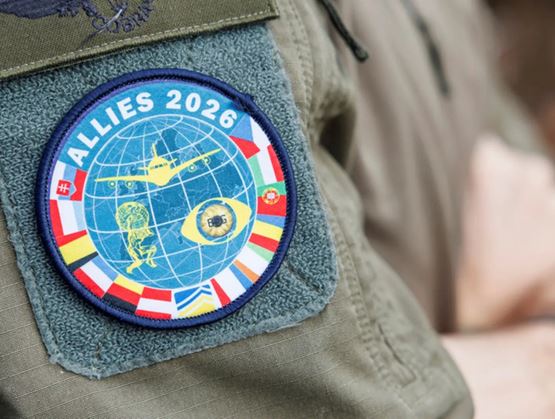
The security environment in Europe continues to evolve, with organised crime networks leveraging digital tools and hybrid threats targeting infrastructure vulnerabilities. Exercises such as Allies 2026 reflect a proactive approach to preparedness.
Rather than responding reactively to incidents, European law enforcement agencies are investing in interoperability, joint training and shared doctrine. The ability to conduct uninterrupted surveillance across jurisdictions, manage intelligence securely and execute coordinated interventions is increasingly critical.
Participating countries in the exercise included Austria, Belgium, Czechia, France, Germany, Hungary, Ireland, Luxembourg, the Netherlands, Portugal, Romania and Slovakia.
By simulating real-life operational complexity under controlled conditions, Allies 2026 provided a structured environment to identify gaps, refine procedures and reinforce mutual trust between agencies.
Operational Cooperation in Focus at Milipol
As international security professionals gather at events such as Milipol, exercises like Allies 2026 demonstrate the practical dimension of European cooperation. Beyond policy discussions, they highlight the operational frameworks, technologies and tactical standards that underpin cross-border security efforts.
In a context marked by transnational crime, hybrid threats and rapid technological change, interoperability is a prerequisite for effective law enforcement. Allies 2026 underscores how coordinated preparation today strengthens collective resilience tomorrow.
Images credit : Europol