
Following Criminal Profits: Brazil, Italy and France Crack Down on Organised Trafficking Networks

Across continents, states are tightening their grip on the financial lifelines of organised crime. From Brazil to Italy to France, new laws and sweeping operations are reshaping how authorities trace, seize and repurpose illicit wealth.
Brazil: dismantling cartels through financial control
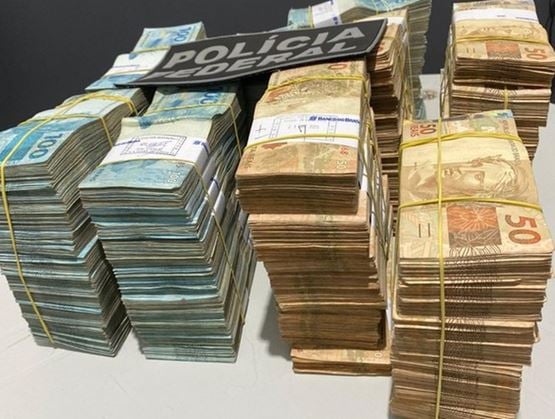
In Brazil, the fight against organised trafficking has shifted focus from street-level raids to economic disruption. The government’s 2019 Anti-Crime Package introduced Article 91-A of the Penal Code, a legal innovation known as “extended confiscation.” This allows courts to seize assets that exceed a suspect’s lawful income, even when no direct link to a specific offence is proven. It represents a significant evolution in Brazilian criminal law, designed to erode the economic foundations of gangs such as the Primeiro Comando da Capital (PCC) and Comando Vermelho.
Alongside this measure, the country’s Organised Crime Law (Law 12.850/2013) and Drug Law (Law 11.343/2006) provide broad authority for the Federal Police to freeze and confiscate property used in trafficking. These tools are reinforced by Brazil’s anti-money-laundering framework, which permits investigators to pursue companies and intermediaries used to disguise criminal profits. The Superior Court of Justice has repeatedly upheld these measures, confirming that corporations can lose their assets if they benefit from organised criminal activity.
The scale of Brazil’s enforcement has grown rapidly. In 2024, the Federal Police reported more than R$5.6 billion in assets seized from criminal organisations, an increase of 70 percent compared with the previous year. In August 2025, Operation Hidden Carbon became a symbol of this strategy. Focused on a sprawling network tied to fuel smuggling and money laundering, investigators froze assets worth around R$1.2 billion and mapped a further R$30 billion in hidden funds. Farms, transport fleets, ethanol plants and port terminals were among the confiscated properties, showing how asset tracing now reaches the highest tiers of Brazil’s underworld economy.
These developments underline a fundamental shift: the state’s power to bankrupt rather than merely prosecute its criminal adversaries. The success of these efforts, however, still depends on coordination between courts, police and financial authorities, and on maintaining transparency in how confiscated assets are repurposed for public use.
Italy: the blueprint for asset confiscation
Italy’s long history with organised crime has produced one of the most sophisticated legal frameworks in the world for asset seizure and confiscation. At its heart lies Article 416-bis of the Penal Code, which criminalises “mafia-type association” and enables the state to target both individuals and the criminal structures they control.
The Anti-Mafia Code (Legislative Decree 159/2011) provides for “preventive confiscation,” a measure unique in Europe that allows authorities to seize assets even without a prior conviction. If a person’s wealth is found to be disproportionate to declared income and linked to mafia influence, courts may order the confiscation of those assets after a civil procedure. This approach, born from decades of anti-mafia investigations, is widely regarded as one of the key factors in weakening the financial power of Cosa Nostra, the Camorra and the ’Ndrangheta.
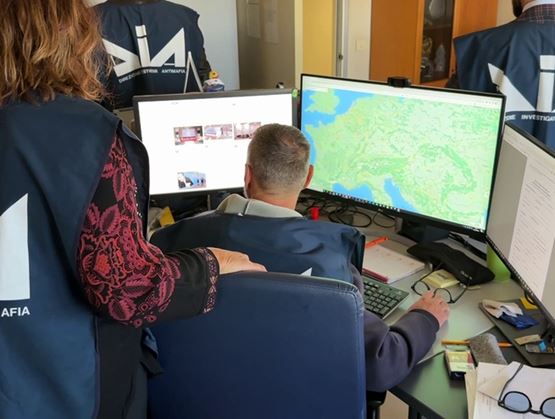
The Direzione Investigativa Antimafia (DIA) leads these operations, often working alongside the National Anti-Mafia Prosecutor’s Office (DNA) and the financial police. Their actions are complemented by the ANBSC, the National Agency for Seized and Confiscated Assets, which manages and redistributes confiscated property. Warehouses, restaurants, farmland and entire companies once controlled by the mafia have been reassigned to local municipalities or cooperatives for social use, turning symbols of criminal power into instruments of community renewal.
Recent figures illustrate the enduring intensity of this campaign. In 2024, Italian authorities seized assets worth €55 million in the Naples area linked to a businessman operating under mafia protection. A nationwide series of DIA actions in 2025 resulted in further confiscations exceeding €23 million. Another cross-border investigation with the European Public Prosecutor’s Office uncovered a vast VAT fraud scheme tied to organised crime, freezing €520 million across several EU countries.
Italy’s approach combines judicial action with a clear social vision. Confiscation is not only a legal punishment but also a moral statement: the proceeds of intimidation, extortion and trafficking can, and must, be reinvested in society.
France: tightening the net around trafficking networks
France’s strategy against organised trafficking has evolved through a mixture of police operations and legal reforms. The highly visible Place Nette XXL operations, launched in 2024, aimed to disrupt urban drug markets through simultaneous raids in major cities such as Marseille, Lille and Lyon. Within weeks, thousands of arrests were made, with tonnes of narcotics and millions of euros seized.
Beneath the headline operations, France has built a robust legal foundation for asset recovery. The Criminal Code and the Code of Criminal Procedure empower judges to seize and confiscate property used in or derived from crime. Law No. 2010-768, passed in 2010, created a national framework for asset management and gave rise to the Agency for the Management and Recovery of Seized and Confiscated Assets (AGRASC). This agency ensures that property seized during investigations is preserved, managed and ultimately sold or repurposed by the state.
Further legislative updates have strengthened this system. The 2024 reform expanded the scope of mandatory forfeiture, making it easier for courts to order confiscation of assets connected to offences such as drug trafficking, money laundering and organised crime. Value-based confiscation is also permitted, meaning that even when illicit funds are transformed into legitimate assets, equivalent-value property can still be taken.
The French model remains conviction-based, requiring a judicial decision to finalise confiscation. Nonetheless, cooperation with TRACFIN, the country’s financial intelligence unit, has improved the tracing of hidden wealth and cross-border transfers. Internationally, France supports the return of confiscated assets to affected states, reinforcing its commitment to global anti-trafficking standards.
From policy to practice
Across these three nations, the strategy is converging on a simple but powerful principle: deprive criminals of their wealth, and their influence collapses. Brazil has turned to algorithmic audits and digital tracking to trace assets; Italy has institutionalised preventive confiscation and community reuse; France is tightening the procedural framework that underpins its high-profile enforcement campaigns.
To explore how these strategies, technologies and policies intersect within the global security ecosystem, visitors can learn more at Milipol Paris, the world’s leading event for homeland security and safety professionals.
Image credit: AGRASC
Image credit: Ministério da Justiça e Segurança Pública
Image credit: Direzione Investigativa Antimafia