
Global Collaboration in Large-Scale Disaster Response

When a major disaster strikes, the technical challenge of identifying victims is inseparable from a human one. Families wait for answers, authorities face intense pressure, and borders quickly dissolve as victims from multiple countries are involved. This reality framed the conference session on international cooperation in mass disaster contexts held in November at Milipol Paris 2025, where practitioners shared lessons drawn from terrorist attacks, aviation disasters and natural catastrophes.
Moderated by Christian Decobecq, Director of Police at ETAF, the first European Training Center for Disaster Victim Identification and Forensic Sciences, the discussion brought together operational voices from law enforcement, forensic science and international coordination. Speakers agreed that Disaster Victim Identification, or DVI, is no longer a purely national responsibility. Even countries with well-established capabilities depend on cross-border collaboration to deliver accurate identifications quickly and respectfully.
Why international cooperation remains essential
Charles Lamens, Coordinator of the INTERPOL DVI Unit, addressed a question often raised by national authorities: why involve international partners when a country already has its own DVI team? According to Lamens, the first answer lies in learning. Working in an international environment exposes teams to different procedures, technologies and case studies, many of which lead to improvements at home. He explained that annual DVI conferences and working groups act as forums where experience is shared openly, allowing practices to evolve.
The second reason is operational reality. Very few major disasters involve only one nationality. Aircraft crashes, maritime incidents and terrorist attacks increasingly affect victims from dozens of countries. Lamens underlined that identification relies on the rapid exchange of antemortem data from relatives, which may be located thousands of kilometres away. “Speed is essential in identification,” he noted, stressing that families wait for confirmation and closure.
This point was reinforced through concrete examples. One speaker recalled the 2016 Brussels attacks, which resulted in 32 fatalities from 18 nationalities. Despite Belgium’s own DVI capability, international coordination proved decisive. Interpol channels enabled foreign DVI teams to collect antemortem information in their home countries and transmit it securely, significantly accelerating the process. Similar mechanisms were used following the Ethiopian Airlines crash in 2019, when Belgian experts reinforced an international coordination centre handling data from multiple affected states.
Coordination, culture and operational trust
Lieutenant-Colonel Sébastien Follot, Expert Officer at the Investigation and Identification Unit of the French National Gendarmerie’s Criminal Investigation Institute (IRCGN), focused on how cooperation before a disaster strengthens resilience when one occurs. He emphasised that while Interpol provides a common framework, each country adapts procedures to its legal and judicial context. Understanding these differences in advance builds trust, which is crucial when accepting identifications carried out abroad.
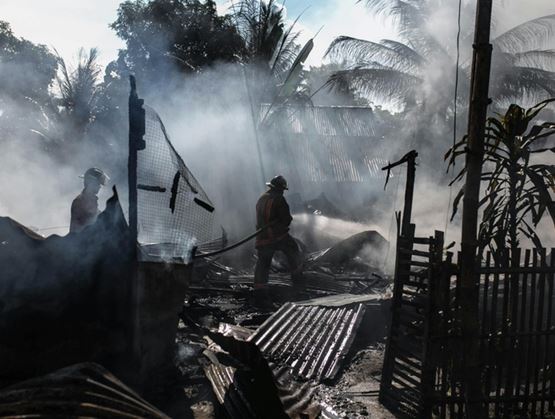
Follot warned that without confidence in a partner’s process, countries may feel compelled to repeat identifications once victims are repatriated, delaying their return to families. Preparation, he argued, is therefore fundamental. This includes joint exercises, multidisciplinary training and regular exchanges between police, forensic experts and partner agencies at both national and international levels.
Cultural factors also shape operations. Drawing on missions in Lebanon and Mali, speakers discussed how local funeral rites, religious expectations and political structures can profoundly affect identification work. In Beirut after the 2020 explosion, for example, authorities faced the need to reconcile French identification procedures with local practices that required bodies to be released rapidly for burial. According to Follot, adapting to these constraints while maintaining scientific rigour required dialogue with sovereign authorities and a deep understanding of local realities.
Culture also operates within multinational teams. Lamens recalled that during the Malaysia Airlines Flight 17 crash investigation, around 12 nationalities worked side by side. Initial differences in working styles were gradually overcome as teams aligned around shared protocols. After a few days, he explained, the focus shifted entirely to the task, with cultural tensions giving way to operational cohesion.
Improving protocols and supporting families
Sophie Carliez, Group Head UNI-IVCU at the French national forensic science service (Service national de police scientifique - SNPS), outlined how recent missions have driven tangible improvements in DVI protocols, particularly in the way families are supported. She recalled that modern DVI practice dates back only to the late 1990s and continues to evolve. One major advance in France has been the creation of the French interministerial public information and victim support cell, which centralises communication and directs families to trained identification specialists.
Carliez explained that this system ensures relatives are guided by experts from the outset and supported by psychologists, the Red Cross and victim assistance organisations. Another key development concerns the identification commission itself. Rather than waiting for all antemortem and post-mortem data to be processed, commissions now convene progressively, sometimes several times a day. This allows identifications to be confirmed and bodies released more quickly, easing the distress of waiting families.
Speakers also highlighted the extension of DVI expertise to living victims who cannot identify themselves, such as those in critical condition in hospitals. Lightweight protocols now allow trained teams to establish identity under medical supervision, again responding to families’ need for timely information.
Sergio Castro Martinez, Chief Inspector with the National Police of Spain, broadened the discussion to everyday identification challenges. In open disasters such as floods, where there is no passenger list, cooperation becomes even more complex. According to Castro Martinez, biometric databases help identify nationals, but foreign victims require international channels, embassies and Interpol notices to obtain antemortem data. Without this cooperation, some identifications would remain unresolved.
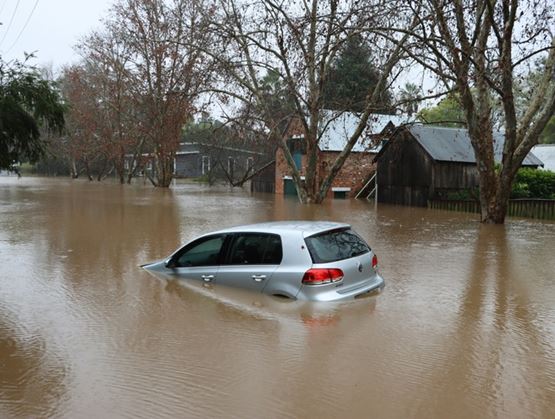
As the session concluded, a shared message emerged. International cooperation in mass disaster contexts is a structural necessity. It depends on preparation, trust, cultural awareness and robust information-sharing mechanisms. By bringing these operational realities into focus, Milipol Paris once again positioned itself as a forum where global security actors confront complex challenges together, reinforcing its role as a platform for advancing collective responses to crises that know no borders.
Image credits:
Denniz Futalan - Pexels
Wes Warren - Unsplash