
Inside Sayari's Methods to Reveal Hidden Risks

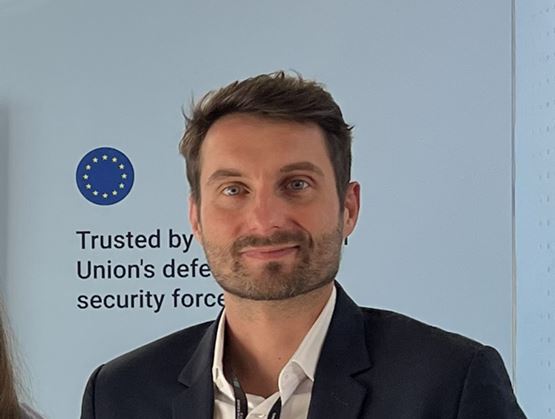
Germain BATTEZ, Enterprise Account Manager
From your experience as Enterprise Account Manager, what are the priorities and most frequent challenges of your clients in the defence, intelligence or law-enforcement sectors?
We consistently observe that organisations, particularly those with complex ecosystems, struggle with two systemic challenges in their third-party risk management programs.
The first is the ability to get visibility into the non-obvious risks within their network of third parties. While most companies have robust internal policies and mature processes for managing direct suppliers and customers, they hit a critical barrier when assessing non-obvious, sub-tier risks. The regulatory landscape is evolving rapidly, pushing organisations past simple 'list-based' risk assessments. These new rules demand true end-to-end supply chain transparency, requiring visibility into sub-tier vendors to properly manage complex risks like FOCI (Foreign Ownership, Control, or Influence) or Military end-use and maintain operational resilience.
The second relates to the organisation's internal processes. Third-party risk programs are often fragmented. They are distributed across multiple functions (Legal, Procurement, Compliance, IT Security), each operating with manual handoffs and siloed tools. This fragmentation significantly impedes agile decision-making and slows down crucial risk resolution processes. Organisations are increasingly looking to adopt a unified approach: a 'single pane of glass' platform built on a single source of truth to address both emerging and complex risks with the necessary flexibility and speed.
How do you handle customer concerns about data sovereignty, privacy or regulatory compliance when deploying products like Sayari’s in law-enforcement or defence environments?
This topic sits at the core of how Sayari partners with high-security government and regulated organisations. Our strategy is built on three pillars: Access, Control, and Flexibility.
Sayari's primary value is providing access to global public record data such as commercial, trade, and corporate registries that regulators and agencies often cannot access directly, particularly in high-risk or opaque jurisdictions.
For Indirect Data Access, we act as a trusted intermediary, collecting and structuring this data according to the legal frameworks of the source jurisdiction. This means analysts gain critical, foreign-sourced intelligence on corporate networks without needing to establish complex, direct data-gathering operations in non-cooperative countries.
The vast majority of our data maintains a clear, court-admissible audit trail to the original public record, which is essential for compliance and legal proceedings.
We recognise that the primary concern around sovereignty and privacy is control over the operational environment and any sensitive customer data. Sayari addresses this with maximum deployment flexibility:
- Localised Hosting: For many clients, we deploy the Sayari platform within localised hosting environments (e.g., specific regional cloud regions) to meet data localisation requirements, ensuring that the customer's work product and investigative data stays within the required legal jurisdiction.
- On-Premise Deployment: For the most sensitive missions, high-security agencies, or air-gapped environments, we can implement full on-premise deployment. In this model, the entire Sayari application and its global data holdings sit entirely within the customer’s secure physical infrastructure. This completely alleviates concerns regarding external privacy or data access because the data never leaves their control.
Natasha EDWARDS, Senior Solutions Consultant
.jpg?rev=678c931fb9f644b2a22c96c6cac76539&w=555&hash=D9BBD15DC980BB1492DBB78DA92C6484)
Can you tell us a little about Sayari’s product suite (Graph, Map, Signal, Guide)?
Sayari is first and foremost a data provider, a knowledge graph of corporate and trade relationships between 800M companies and 700M affiliated individuals from global corporate registries, watchlists, government procurement records, trade records, adverse media, corporate property ownership, and more.
Sayari delivers a full suite of automated analytical workflows to streamline government and private sector client workflows, including third party risk management and trade compliance, to intelligence case development, and new lead generation for financial and serious organized crime investigations. Furthermore, Sayari has pre-computed entity-level risk across the full knowledge graph and flags impacted entities so users can triage, visualise, and understand that risk in context. We present this in network maps, supply chain tiers, and list based risk.
Our product Graph allows users to conduct investigations into corporate networks, target entities, and extract source documents for reporting and evidence.
MAP leverages bills of lading from trade records to investigate complex international supply chains for supplier screening and sanctions evasion methodologies.
Signal provides modular content sets that integrate seamlessly into existing screening systems to uncover hidden risks, tailored to areas such as trade compliance.
Guide is a modular solution for third-party risk screening and workflow automation, integrating Sayari corporate ownership and trade data with customisable partner third party risk screening workflow solutions for screening, case management, continuous monitoring workflows and more.
Sayari also offers API and full data file sales for integration into clients’ own environments.
How do you work with law enforcement and other clients to tailor Sayari’s solutions to their investigative workflows?
Today, my role involves training our clients to be able to leverage our tooling and data to support their workflows and data needs. In law enforcement, our users leverage our data for case development and lead generation, and evidence collection in financial crimes such as money laundering and romance fraud, narcotics trafficking, and asset recovery.

Claudio DI GREGORIO, Regional Lead - France, Italy, Spain
What type of feedback do you receive from investigative teams when they first access a data platform like Sayari’s?
Investigators and analysts first gain access to Sayari’s platform when they are evaluating the solution and are trying to understand the value that it brings to their work. The teams who access Sayari’s data are enthusiastic about the efficiency of the tools and data.
We’ve heard firsthand about the ability of teams to save weeks and months in their investigations. It’s important for us to focus on our customers’ outcomes. We take content and tooling feedback seriously and action it quickly.
Investigative teams not only appreciate how intuitive Sayari’s platform is, they also welcome the transparency we provide, the multitude of data sources (especially from important yet challenging jurisdictions) and different types of data (corporate data, trade data and more).
Given that many law-enforcement organisations operate under tight budgets and strict procurement cycles, how do you help make the case for investment in public-data-centric platforms?
Focusing on teams and areas where we know Sayari can be impactful is the first step. In the public sector we know that we can move the needle on a variety of topics such as Financial and Economic Crime, Terrorism Financing, National Security, Sanctions, Investment Screening and many more.
Secondly, with customers from LEAs, Defense, the intelligence community, etc., we spend a couple of weeks with them to put their hands on the data. We also focus on making sure they can define and measure the outcomes.
Euan CRAWFORD, Director of Growth, EMEA Government
What regional trends do you observe across EMEA in how public data is being adopted by state agencies (e.g., Western Europe vs CEE vs MENA)?
While public data adoption in Europe has advanced into complex security applications, such as vetting foreign investments and securing critical supply chains, this progress often masks critical gaps. Many public-sector agencies are still hampered by legacy infrastructure and slow policy adoption, creating significant security vulnerabilities.
How do you articulate the value of Sayari’s product portfolio to government agencies in EMEA, especially those with limited prior experience of commercial public-data platforms?
For agencies with limited experience, the value of an advanced commercial data platform must be articulated as a mission solution, not a technology project. These organisations aren't seeking complex, long-term data-strategy tools; they are confronting urgent, mission-critical threats.
The key is to reframe their limited experience: it is not a barrier, but the primary justification for acquisition. Governments cannot afford to spend years building internal expertise while their core security is being actively undermined. Advanced private-sector capabilities move teams from reactive to proactive enforcement, providing immediate visibility into the private commercial networks that public data portals simply miss.
This approach uses a dedicated product portfolio to solve specific, regional challenges. At Sayari, we have helped multiple European public safety and national security clients solve some of their toughest challenges, including:
- Sanctions Evasion: Exposing the private shell companies that public data cannot see.
- Supply Chain Illumination: Mapping the complex, cross-border corporate structures used in trade-based money laundering.
- Supply Chain Risk Identification: Proactively vetting contractors for hidden links to foreign adversaries.
In each of these cases, Sayari provides the immediate, turnkey solution to their most pressing security challenges.
Click here to learn more about Sayari or visit their stand at Milipol Paris 2025: Hall 5A / Stand G59