
Cold cases, justice and long-term investigation in France

The discussion focused on the National Unit for Serial and Unsolved Crimes (PCSNE), created in 2022 and based at the Nanterre Judicial Court, which brings together specialised magistrates, investigators and judicial staff to centralise the handling of the most complex unsolved crimes at national level. Designed to restart stalled investigations and strengthen cooperation in France and abroad, the unit represents a world-unique judicial model. For visitors and exhibitors at Milipol Paris, the session offered a rare insight into how judicial expertise, forensic science and emerging technologies are being combined to give new momentum to cases that time alone has not resolved.
The session began with a reminder that reopening an unsolved case is not simply reopening a file. It is reopening a human story, with families waiting, victims who have never been forgotten, and institutions expected to remain faithful to justice even decades later. That framing shaped everything that followed: the PCSNE was presented less as a structural reform and more as a deliberate commitment to not abandoning the hardest cases
Building a world-unique judicial centre for unsolved cases
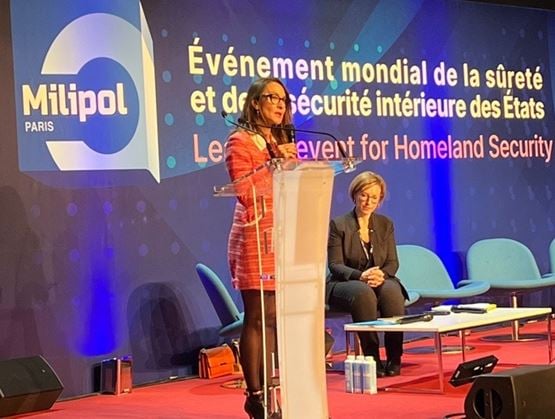
The PCSNE was created with a blank sheet of paper, a pen and an empty office, and with doubts from across the system about whether local prosecutors would ever agree to hand over their files. That reluctance, she suggested, came from a natural instinct to guard investigations that are sensitive, complex and deeply rooted in local jurisdictions.
Yet the case for a dedicated national hub was operational rather than symbolic. The PCSNE is not a police unit alone. It brings together specialised magistrates and court staff who can take the time to absorb vast case files, steer investigative strategy and, crucially, provide continuity.
Valérie Duby, court clerk at the Nanterre Judicial Court and one of the architects of the project alongside Sabine Kheris, described how the idea took shape through immersion in the Fourniret–Olivier case files, a major investigation into a series of kidnappings, rapes and murders committed over many years in France and Belgium. Working through around 200 volumes, she said, made structural problems painfully visible: fragmented information, missing links between jurisdictions, and weaknesses in how exhibits and records were preserved. Duby explained that she drafted a practical proposal, informed by what “the field” was already saying, and presented it to the then Minister of Justice, Éric Dupond-Moretti, in early 2021. The speed of the decision that followed underlined the scale of the perceived gap.
Centralisation, coordination and the “memory” of crime
Sabine Kheris, Coordinator of the Cold Case Unit at Nanterre, reinforced that the unit’s core purpose is to bring consistency and continuity to investigations that can otherwise be repeatedly interrupted by turnover, changing priorities and limited time. She spoke about the challenge posed by mobile serial offenders, where the absence of systematic coordination can prevent connections being made early enough. The PCSNE, she explained, was designed to concentrate specialist knowledge and make it easier for magistrates and investigators to work with the same reference points over time.
From the operational side, Franck Dannerolle, Head of the Central Office for the Repression of Violence against Persons (OCRVP), offered a stark illustration of why unsolved cases demand a different model. He noted that France records roughly 900 homicides per year, with a little over 80% solved, and that among those solved cases, around half are resolved within 24 hours, with about 65% resolved within a week. What remains after that period is not simply “the rest”. It is often the most complex category of crimes: murders, rapes, abductions, disappearances and cases where seriality is suspected.
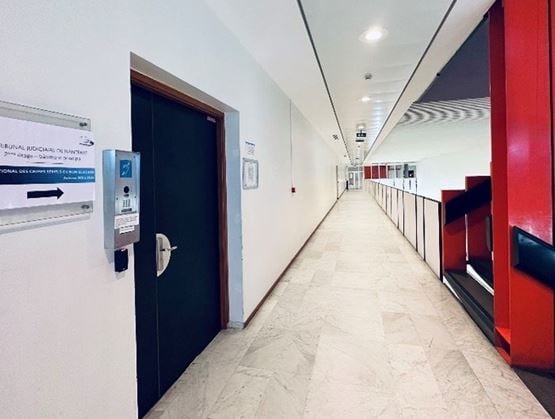
The prosecutors’ perspective came from Marie-Céline Lawrysz, Deputy Public Prosecutor in charge of the Cold Case Unit. She explained the unit’s scope and its limits. A “cold case”, in this framework, is a case that remains unresolved after 18 months of investigation. The PCSNE is competent only for specific categories of serious crimes, and it is not designed to take every unsolved case in France. Selection is therefore unavoidable, and the unit has to build a structured overview of known cases, signals and potential links.
That overview, described as a developing “criminal memory”, is fed through multiple channels: prosecutors and judges in the regions, specialist police and gendarmerie services, victims’ lawyers, and sometimes media reporting that draws attention to overlooked files. The goal is twofold: to identify serial connections and to spread good practice beyond Nanterre so that fewer cases drift into what Lawrysz called, in effect, the cupboard where investigations go quiet under the weight of urgent daily work.
Forensics and AI as force multipliers, not replacements
If centralisation is the organisational breakthrough, scientific progress is the accelerator. Marie-Laure Brunel-Dupin, Lieutenant-Colonel and Head of the Unsolved Cases Division within the French National Gendarmerie, insisted on a point of language that reflects a deeper philosophy. These are not “dead” files, she said, but active cases that have been “warmed up” through renewed attention and the best available techniques.
She described the modern unsolved-case approach as bespoke, combining long-established pillars such as behavioural analysis with newer capabilities, including criminalistics specialists who return to exhibits and archived materials to see what can now be extracted, compared or reinterpreted. The emphasis is on learning from past investigations to avoid creating the “cold cases of tomorrow”, particularly by improving early-scene practice, preservation of exhibits and disciplined documentation.
The session also highlighted why technology is now central. As Lawrysz explained, the PCSNE is working towards tools that can support large-scale cross-referencing, including the use of artificial intelligence to help detect correlations that would be invisible to humans scanning thousands of pages across hundreds of cases. The ambition is not automated justice, but assisted insight: using computation to narrow the search space, connect signals and prompt questions that investigators and magistrates can then test.
A closing example made the human stakes tangible. Brunel-Dupin described how a vehicle was discovered after a lake was drained, leading to the resolution of a 34-year disappearance and giving a daughter an answer at last. It captured the session’s core message for security professionals: time can erase traces, but it can also create new opportunities, provided institutions have the structure, culture and technology to act when the moment comes.
Image credit : Cleverdis
Image credit : Ministère de la Justice