
France’s New Voluntary Military Service

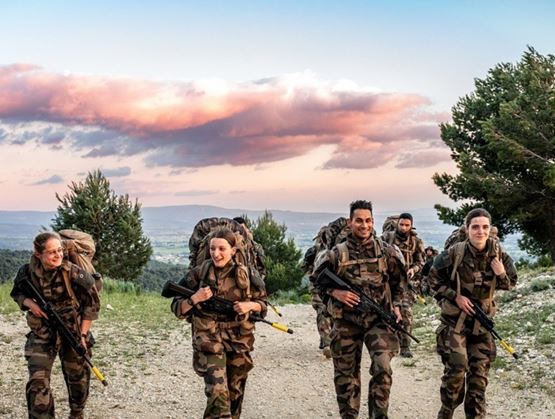
France has unveiled plans for a new voluntary military service for young people aged 18 and 19, set to begin in summer 2026. President Emmanuel Macron confirmed that the first cohort will comprise around 3,000 volunteers, with the intention of gradually expanding to 10,000 participants in 2030 and 50,000 by 2035.
The programme will run for 10 months. According to official information, volunteers will complete one month of initial military training followed by nine months assigned to operational units within mainland France or overseas territories. Tasks will vary depending on the unit and may include logistical support, maintenance, administrative duties and general assistance to military teams. The
Ministry of the Armed Forces and the French government have stressed the voluntary nature of the initiative. France is not reinstating compulsory service; the long-standing suspension of conscription remains unchanged.
A notable feature of the new system is its integration with Parcoursup, France’s national online platform through which high-school graduates apply for university places. Parcoursup manages admissions and allows students to list their preferred institutions. From 2027 onward, volunteers will be able to take a recognised gap year specifically to complete their service. Their university placement request can be maintained for the following academic year, or they can reapply with additional credit given to the skills and experience gained during service.
European trends: evolving approaches to service
France’s reform comes as several European countries review or adjust their own approaches to military service. In Germany, policymakers have agreed on a new model starting in 2026 in which all 18-year-old men will be required to fill out a questionnaire and undergo medical screening, allowing the government to identify those eligible for potential service. Although participation will initially remain voluntary, authorities have left open the possibility of restoring mandatory service if recruitment targets are not met.
Elsewhere in Europe, Croatia recently confirmed the reintroduction of military conscription for young men, returning to a model it suspended over a decade ago. Officials stated that this decision was part of a long-planned restructuring of national defence policy.
Other EU countries maintain conscription in various forms. Nations such as Finland, Austria and Greece operate long-standing models of mandatory service for men, while countries like Lithuania reintroduced conscription in the past decade. Discussions are also underway in several other states about revisiting service obligations or expanding alternative civilian service options.
What emerges across Europe is a diverse but noticeable movement towards strengthening national service capabilities, either through voluntary pathways, updated conscription models or expanded reserves.
Global developments and varied service models
Beyond Europe, several countries around the world maintain or are reassessing military service systems, reflecting a wide spectrum of approaches shaped by demographic, cultural and organisational factors. South Korea, for example, operates one of the most structured and well-established conscription models globally. All eligible men must complete between 18 and 21 months of service, depending on the branch. This system remains a central component of national policy and is closely linked to long-term workforce planning within the armed forces.
Brazil also maintains compulsory service for men at age 18, though in practice only a portion of each cohort is selected. The country uses a lottery-based system, meaning that while all young men register, only those drawn or deemed needed by the armed forces serve. This selective model allows Brazil to sustain a consistent level of military staffing while avoiding the costs of training an entire age group.
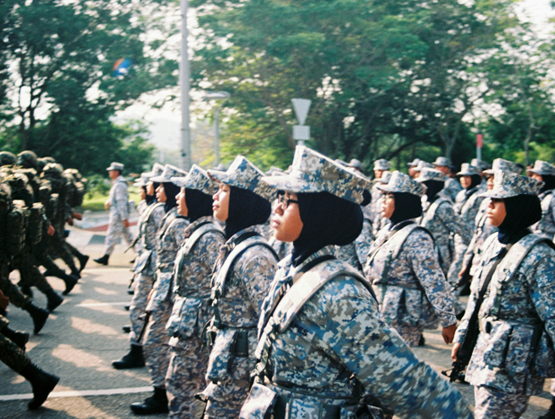
In Japan, debate continues over how best to sustain the country’s defence personnel in the decades ahead. Japan does not have conscription and relies entirely on voluntary recruitment for its Self-Defense Forces, but demographic decline and an ageing population have prompted national discussions about long-term staffing strategies. These conversations do not involve reinstating conscription but instead focus on improving career attractiveness, enhancing training pathways and exploring new forms of public engagement.
As other countries adjust their service models to meet 21st-century security demands, France’s decision to introduce a ten-month voluntary military service marks a major shift in the country’s approach to national service. With financial benefits for volunteers, structured training and compatibility with university admission procedures, the programme is designed to offer young people a practical experience, combining military training, practical roles and civic participation in a structured but voluntary framework. While distinct from traditional conscription, the programme sits within a wider international movement in which countries are reassessing how best to engage their young citizens in national service while adapting to evolving national and global security needs.
For the Milipol Paris community, the evolution of national service models provides useful context for how countries prepare younger generations for roles requiring commitment, technical skills and civic responsibility. These shifts also intersect with broader questions relevant to homeland security, from resilience and emergency readiness to the development of specialised capabilities. Milipol Paris remains a forum where such societal trends can be observed alongside innovations, professional practice and international dialogue shaping the future of homeland security.
Image credit : Ministère des Armées et des Anciens combattants
Image credit: Yusuf Sabqi - Unsplash
Image credit: Remi LEAL / Armée de l'Air et de l'Espace