
Milipol Qatar 2026

Milipol Qatar reaches its 30th anniversary at a moment when the security environment across the Middle East is placing renewed emphasis on resilience, preparedness and technological capability. Held at the Doha Exhibition and Convention Center, the 2026 edition is organised by Qatar’s Ministry of Interior under the authority of HE Sheikh Khalifa bin Hamad bin Khalifa Al Thani, Minister of Interior and Commander of the Internal Security Force, Lekhwiya. The event has been held in Doha since 1996 and forms part of the wider Milipol Network.
Thirty Years at a Regional Crossroads
Over three decades, Milipol Qatar has developed into a meeting point for government authorities, security agencies, civil defence organisations and technology suppliers operating across the Gulf and wider Middle East. Its biennial format has allowed the exhibition to track successive shifts in the security market, from conventional protective equipment and law enforcement systems to cyber resilience, autonomous platforms and data-led security.
The 2024 edition provided a measure of that reach. It welcomed 14,500 visitors from 63 countries, 255 exhibitors from 26 countries and 360 official delegates representing 42 countries. Visitor feedback also indicated that 90 per cent were satisfied with the event. More significantly from a procurement perspective, 52 per cent attended with an investment project and 85 per cent of that group reported finding solutions that could help bring those projects to completion.
The 2026 edition is expected to attract more than 250 exhibitors and over 14,000 visitors. For international suppliers, Doha offers access to decision-makers in a region where critical infrastructure, public safety, border security and digital resilience remain central concerns for the security community.
Technology in the Foreground
The exhibition’s technology mix reflects the way homeland security is becoming increasingly interconnected. Cybersecurity and data protection now sit alongside physical protection systems, while autonomous systems, drones and robotics are becoming more relevant to surveillance, inspection, emergency response and specialised operations.
Critical infrastructure protection is another prominent area, particularly for countries where energy facilities, transport networks and urban systems are strategically important. Oil and gas security, perimeter protection, command-and-control capabilities, smart surveillance and camera systems all fit within a broader shift towards integrated security architectures.
Civil protection remains equally visible. Fire safety, rescue equipment, crisis management and emergency response technologies continue to form part of the event’s core offer, alongside equipment for special and intervention units. This combination gives Milipol Qatar a broad remit, covering both emerging digital threats and the operational realities faced by public safety organisations.
A Marketplace Built Around Decisions
The event’s commercial role is closely tied to the profile of its audience. Half of visitors to the 2024 edition were involved in purchasing, according to organiser data, while official delegations and senior government representatives formed a substantial part of the attendance.
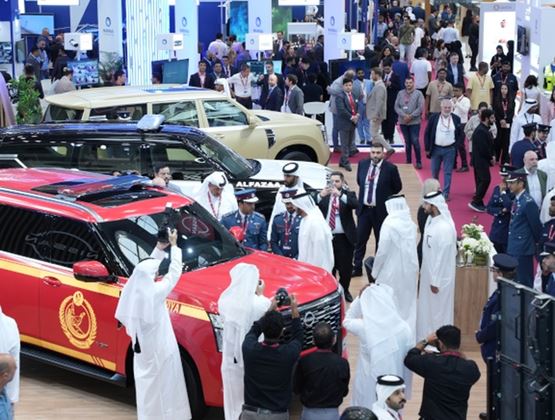
That creates a setting in which live demonstrations and product showcases are accompanied by discussions on implementation, procurement and operational requirements. For companies looking to enter or expand within Gulf Cooperation Council markets, the value lies not simply in visibility but in direct contact with buyers, end users and public authorities. The event specifically positions networking, business development, innovation discovery and expert seminars among its principal reasons for attendance.
The regional context adds further weight. Heightened geopolitical risk in 2026 has increased attention on the modernisation of security capabilities, cyber resilience and the protection of critical national infrastructure. In that environment, suppliers with advanced capabilities in secure communications, autonomous systems, surveillance, cybersecurity, crisis management and civil defence are addressing markets increasingly focused on interoperability and long-term resilience.
An Anniversary Programme Looking Forward
The 30th anniversary will give the 2026 edition a distinctive programme. For the first time, Milipol Qatar will stage anniversary awards recognising excellence, breakthrough technologies and contributions to the homeland security and safety sectors. A 30-year retrospective museum will trace the event’s development from 1996 to 2026, placing changes in technology alongside the evolution of the regional security market.
The programme will also include a drone show and a seminar strand focused on cybersecurity, civil defence and critical infrastructure protection. These elements are intended to add a technical and strategic layer to the exhibition floor rather than treating the anniversary purely as a commemorative exercise.
Artificial intelligence will receive particular attention through the second Doha AI Security Summit, held alongside Milipol Qatar from 20 to 22 October. Under the theme “Securing intelligence, sovereignty and trust in the AI era”, the forum will examine issues including predictive intelligence, cyber-physical resilience, AI sovereignty, responsible governance and autonomous security systems.
A Milestone Within the Milipol Network
Milipol Qatar’s 30th anniversary also underlines its position within the Milipol Network, the international portfolio of homeland security events spanning several major regional markets. The network gives the Doha event a global frame while retaining a clear focus on the priorities of Qatar, the Gulf and the wider Middle East.
For Milipol Qatar 2026, the balance between continuity and change is likely to define the event. The familiar priorities of civil defence, law enforcement and infrastructure protection now converge with emerging capabilities in AI, cyber resilience and autonomous systems. Thirty years after the first edition, the exhibition is preparing to mark its history by concentrating on the technologies and partnerships expected to shape the next phase of homeland security.