
MKU Expands its Industrial Footprint in Saudi Arabia

MKU Limited recently formalised a strategic joint venture with Sondos Advanced Industry to create Tuwaiq Armour Industrial Corporation in Saudi Arabia. The initiative focuses on localising the manufacture of advanced ballistic protection systems and supporting national defence industrial capability in line with Vision 2030 objectives.
MKU Limited, a global defence and homeland security company, was an exhibitor at Milipol Paris 2025. The company operates internationally across ballistic protection and optronics systems and maintains a presence in multiple regions through its global network. Its newly formed joint venture with Sondos Advanced Industry represents a formal expansion of its industrial footprint in Saudi Arabia.
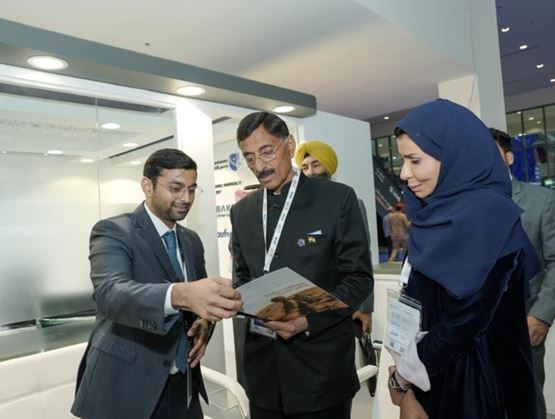
The formation of Tuwaiq Armour Industrial Corporation was formally inaugurated by Raksha Rajya Mantri Shri Sanjay Seth, Minister of State for Defence for the Government of India, in Riyadh earlier this month. The joint venture is positioned as a strategic milestone in MKU’s relationship with the Kingdom.
The initiative centres on the localisation of advanced soldier protection solutions within Saudi Arabia, including ballistic helmets, body armour and hard armour plates. The project aligns with Saudi Arabia’s Vision 2030 objectives, particularly in strengthening domestic defence manufacturing, retaining critical technologies within the Kingdom and developing a resilient national defence industrial base.
Building In-country Production Capabilities
Under the Tuwaiq Armour framework, dedicated manufacturing capabilities have been established within Saudi Arabia for soldier protection systems. These facilities combine MKU’s established technologies and materials expertise with Sondos Advanced Industry’s local industrial infrastructure and market knowledge.
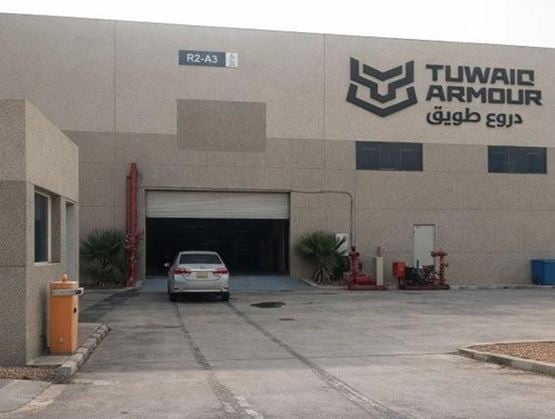
The joint venture places emphasis on structured technology transfer, workforce development and the creation of indigenous know-how. The long term objective is to ensure that production, maintenance and lifecycle support are rooted within the Kingdom, reducing reliance on external supply chains and reinforcing strategic autonomy.
Mr Karan Gupta, Vice President International Sales at MKU Ltd, stated, “The formation of Tuwaiq Armour reflects our long-term intent in Saudi Arabia. We are moving beyond a supply-led engagement towards becoming an embedded manufacturing and capability partner. Together with Sondos, we aim to build sustainable industrial capacity that supports the operational needs of Saudi defence and security forces over the long term”.
From a homeland security standpoint, localisation of production addresses several operational considerations. Domestic manufacturing can improve supply chain resilience, reduce procurement lead times and support faster maintenance cycles. It also enables closer integration between end users and manufacturers, facilitating adaptation to specific operational environments.
For Saudi Arabia, the establishment of in-country ballistic protection production contributes to broader strategic goals of industrial diversification and national capability development. The emphasis on knowledge transfer indicates a long-term industrial framework rather than a short-term assembly arrangement.
Integrating Ballistic Protection and Advanced Optronics Expertise
MKU Limited has operations in India, Germany, Brazil and the United Arab Emirates. Over time, the company has delivered protection to more than three million soldiers and over 3,000 platforms across 230 forces in more than 100 countries.
MKU Limited’s profile in the global defence and homeland security landscape is defined by an expanding portfolio that marries ballistic protection with advanced optronics technologies. The company’s ballistic protection offerings have been showcased through refreshed systems such as the Kavro Doma 360 Ultra helmet, an enhanced variant of its Kavro Doma 360 family designed to counter evolving threat profiles, including armour-piercing rounds, which the company highlighted at Milipol Paris in 2025.
At the show, MKU also introduced the Netro Aksion Thermal Core, described by the manufacturer as its most advanced thermal imaging engine. Built around a high-precision sensor architecture and intelligent image-processing suite, the Aksion Thermal Core aims to deliver sharper visuals, greater detection capability and adaptability across a range of electro-optical applications, from weapon sights to unmanned systems and surveillance equipment. The convergence of protection and optronics at MKU has been part of a strategic push to position Indian defence manufacturing within international markets. The unveiling of both advanced ballistic materials, such as the Kavro Kiro’X ballistic ceramics, and the upgraded helmet systems at Milipol Paris demonstrates an effort to elevate the company’s technological offering while signalling its readiness to engage with security forces and industrial partners seeking integrated capability solutions.
The integration of international product development experience with domestic industrial capability reflects a model increasingly adopted across defence and homeland security sectors. National authorities are seeking not only advanced equipment but also industrial participation, technical sovereignty and lifecycle autonomy.
Strategic Implications for Homeland Security Ecosystems
Ballistic protection systems remain a core component of homeland security operations. Law enforcement units, paramilitary forces and specialised response teams require equipment that balances ballistic performance, weight, modularity and adaptability to varied threat environments.
The joint venture also highlights MKU’s broader capabilities in maintenance, repair and overhaul services under its Navro Platform Maintenance offering. These services enhance night enablement and upgrade surveillance and reconnaissance capabilities for platforms such as aircraft, helicopters, naval vessels, Armoured Fighting Vehicles and Air Defence Systems. Although the Tuwaiq Armour initiative focuses on soldier protection, the wider corporate ecosystem indicates a lifecycle-oriented approach to defence and security support.
In speaking of the joint venture, Ms Tarfa Abdulrhman Al-Motari, Chief Executive Officer and President of Sondos Advanced Industry, stated, “Partnerships such as this strengthen Saudi Arabia’s industrial capabilities while bringing world-class technology and expertise into the Kingdom. This aligns closely with Vision 2030’s goals of localisation, knowledge transfer, and building a self-reliant defence industrial ecosystem”.
For homeland security stakeholders, the localisation of manufacturing is linked to strategic resilience. Domestic production can mitigate risks associated with geopolitical disruption, export restrictions or extended supply chains. It also supports training and skills development within national workforces, strengthening long-term technical competence.
The Tuwaiq Armour joint venture therefore operates at the intersection of operational requirement and industrial policy. As debates around localisation, industrial sovereignty and resilient supply chains continue to shape procurement strategies, initiatives such as Tuwaiq Armour are likely to remain central to discussions at future editions of Milipol Paris.