
Customs at the Heart of Global Security

Borders are no longer defined solely by fences, checkpoints or passport stamps. In today’s interconnected world, they function as complex systems where data, trade flows and security imperatives converge. Every container unloaded at a port, every traveller crossing an airport terminal and every digital customs declaration reflects decisions taken far beyond the physical border itself. It is within this environment that customs authorities operate, balancing the facilitation of legitimate trade and travel with the responsibility to protect societies from economic, security and environmental threats.
International Customs Day, observed on 26 January, offers a moment to examine this evolving role. In 2026, the World Customs Organization (WCO) has set the theme “Customs protecting society through vigilance and commitment”, a formulation that captures both the operational demands placed on customs administrations and the values underpinning their work. According to the WCO, vigilance today extends across supply chains, data systems and enforcement networks, while commitment reflects the long-term investment required to modernise institutions and skills.
Founded in 1952, the WCO is an intergovernmental organisation bringing together 186 national customs administrations, representing almost all global trade. Its mandate is to enhance the effectiveness and efficiency of customs worldwide through common standards, cooperation and capacity building.
Customs and the WCO in a changing world
The scope of customs work has expanded steadily over the past two decades. While revenue collection remains central, customs administrations are now deeply involved in supply chain security, border intelligence, environmental protection and the fight against transnational crime. This shift is closely linked to globalisation, the growth of e-commerce and the increasing sophistication of illicit networks that exploit international trade routes.
The scale of this responsibility is reflected not only in trade volumes, but also in the human resources mobilised to manage them. According to data compiled by the World Customs Organization, there are more than 511,000 customs officers worldwide, forming one of the largest coordinated public service communities operating at the international level. Within this workforce, women now represent around 38 percent of customs administration staff, a figure that signals gradual but tangible progress in a profession historically shaped by uniformed and enforcement-driven roles.
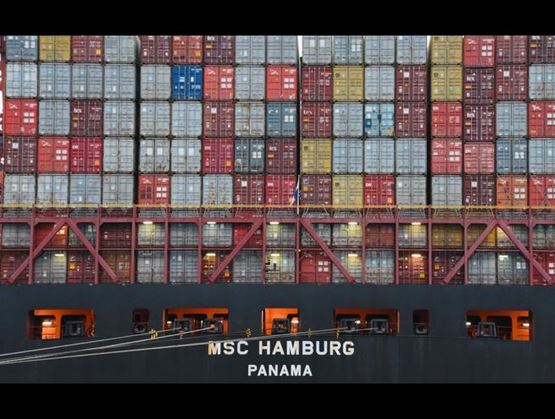
Economic responsibility remains a defining pillar of customs activity. Aggregated information published by the WCO shows that customs duties and taxes continue to account for a significant share of government revenue in many member states, underlining customs’ enduring fiscal importance. At the same time, the concentration of global trade flows through maritime transport, which represents more than three-quarters of international trade value, places sustained operational pressure on ports and maritime border controls, where efficiency and security must coexist.
Beyond economics, customs administrations have become frontline actors in protecting society. Coordinated international operations targeting wildlife trafficking, counterfeit goods and illicit drugs demonstrate how customs authorities increasingly work across borders, sharing intelligence and aligning enforcement strategies. In this environment, the WCO plays a central coordinating role, providing secure platforms for information exchange and acting as a neutral intermediary among administrations operating under different legal, technical and political frameworks.
Institutional transformation is also visible within customs organisations themselves. Professionalisation, integrity and diversity feature more prominently in WCO initiatives, reflecting a growing recognition that trust, transparency and skills development are as critical to effective border management as technology. Expanded training programmes and expert accreditation networks support administrations as they transition towards more intelligence-led, data-driven models of control.
The WCO’s strategic plan for 2025–2028 further reinforces this direction, identifying technology and innovation, e-commerce and green customs as core priorities. Together, these focus areas reflect a broader ambition: to equip customs administrations with the tools, expertise and institutional resilience needed to respond to future border and trade challenges in a rapidly evolving global landscape.
Technology reshaping customs operations
Technology now sits at the core of modern customs practice. Rather than reacting to goods and passengers at the border, administrations increasingly rely on advance information, automated risk analysis and digital decision-making.
In Qatar, International Customs Day 2026 has been the opportunity to highlight this shift with the General Authority of Customs, announcing a new package of artificial intelligence services. These include AI-assisted tools for tariff classification, pre-classification advisory services and virtual assistants designed to support traders and customs officers alike. According to Qatari authorities, these systems aim to improve accuracy, reduce processing times and strengthen compliance while maintaining robust security controls.
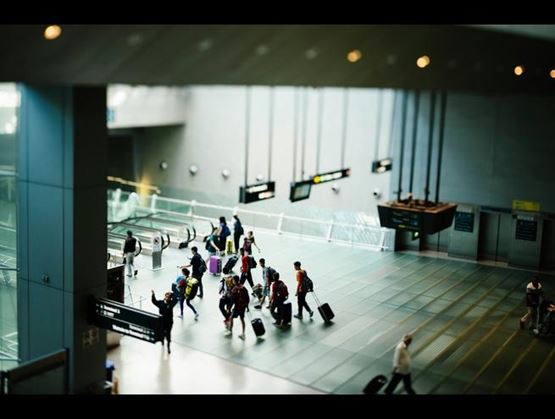
In the United States, customs modernisation has focused heavily on passenger processing. Enhanced Passenger Processing (EPP), developed by U.S. Customs and Border Protection, uses biometric technologies such as facial recognition to verify the identity of returning U.S. citizens before they meet an officer. By automating routine checks for low-risk travellers, EPP allows customs officers to focus on higher-risk cases, illustrating how technology can reinforce both facilitation and vigilance.
Together, these examples show how customs authorities worldwide are redefining their operational models. Artificial intelligence, biometrics and advanced data analytics are no longer experimental tools but integral components of everyday border management.
Customs, security and the Milipol Paris perspective
As customs administrations adapt to new risks and technologies, their role increasingly overlaps with the wider security ecosystem. Issues such as organised crime, cyber-enabled fraud and supply chain resilience demand close coordination between customs, law enforcement and security agencies. This convergence is reflected in the themes explored at Milipol Paris, where border security, public safety and technological innovation are examined through an operational lens. International Customs Day 2026 resonates strongly within this context, highlighting how vigilance and commitment are translated into systems, skills and partnerships that extend well beyond the border line.
Image credits:
Martin Sanchez - Unsplash
CHUTTERSNAP - Unsplash
Jonas F - Pexels