
Turning Video Overload into Investigative Insight

The exponential growth of video and image data has become both an asset and a challenge for internal security professionals. CCTV networks, body-worn cameras, drones and smartphones generate thousands of hours of footage every day. For investigators, the difficulty is no longer access to information but the ability to identify what matters within operational timeframes.
This challenge has shaped IDEMIA France’s work within IDEMIA Public Security, where the Augmented Vision Platform was developed as a response to the operational realities faced by law enforcement agencies working under judicial deadlines, resource constraints and high evidentiary standards.
According to IDEMIA, Augmented Vision was designed to help investigators process vast quantities of video and images rapidly, combining biometric and non-biometric analytics to surface relevant leads while filtering out background noise. The platform draws on IDEMIA’s long-standing expertise in biometrics, with more than five billion biometric records managed worldwide and algorithms consistently ranked among the top performers by the US National Institute of Standards and Technology.
Making sense of video at investigative speed
At its core, Augmented Vision is a video analytics platform capable of analysing both live and recorded footage from a wide range of sources. Initially developed for post-event CCTV analysis, it has evolved to handle inputs from drones, body-worn cameras, smartphones, hard drives and other digital media seized during investigations.
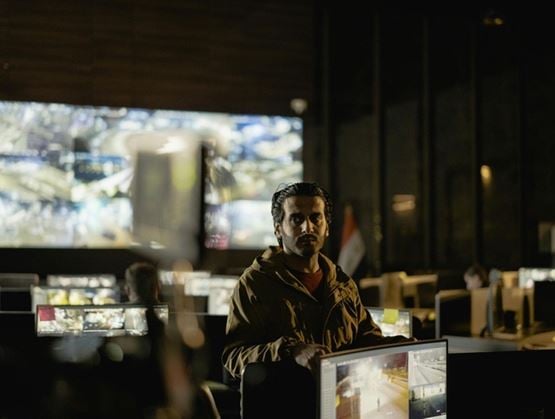
Operationally, this means that hours or even weeks of manual video review can be reduced dramatically. According to IDEMIA, tasks that previously required several officers and weeks of work to review around 500 hours of footage and hundreds of thousands of faces can now be completed in almost a day by a single operator using a standard workstation.
This acceleration is particularly critical during the first 24 to 72 hours following an arrest or major incident, when investigators must establish clear, legally defensible links between individuals, locations and events.
From CCTV to smart devices and beyond
One of the distinguishing features of Augmented Vision is its versatility across data sources and deployment models.
The platform can operate on premises, in the cloud or at the edge, using compact embedded devices based on NVIDIA Jetson technology. This allows it to be deployed in environments ranging from large urban CCTV networks to isolated or covert investigation sites with limited connectivity. In practice, this flexibility enables agencies to exploit data that was previously difficult to analyse at scale. If a suspect’s smartphone or computer is lawfully accessed, Augmented Vision can process stored videos and images, extract thousands of faces and objects, and compare them against existing databases or watchlists.
Mauger describes this as a shift from selective review to exhaustive analysis. The system does not tire, overlook details or lose consistency, which is particularly valuable when dealing with fragmented or unstructured evidence collected across multiple devices and locations.
The platform is also designed to support live video analytics. By monitoring feeds from multiple cameras simultaneously, it can alert operators to predefined events or matches, allowing security teams to intervene proactively rather than reactively.
Proven impact and future directions

Beyond active investigations, the platform has also been used to revisit cold cases, uncovering links and patterns that were not detectable with earlier tools. By automatically associating people, objects and timelines, Augmented Vision supports a more structured approach to case reconstruction.
From a performance perspective, IDEMIA reports false alert rates as low as 0.1 percent per day under defined operational conditions, reflecting the maturity of its underlying analytics.
The company emphasises that these capabilities are developed in line with Privacy-by-Design and Privacy-by-Default principles, with data protection positioned as a core requirement rather than an afterthought.
Looking ahead, IDEMIA’s research and development efforts are focused on further reducing investigator workload while increasing precision. Among the areas under exploration are AI-driven voice analysis to extract and search spoken content within video files, as well as enhanced automatic triage to prioritise the most relevant evidence early in the investigative process.
For visitors to Milipol Paris, IDEMIA France’s Augmented Vision Platform illustrates a broader shift in internal security technologies. As visual data continues to grow in volume and importance, the ability to transform it into actionable intelligence quickly and responsibly is becoming a defining capability for modern law enforcement agencies.
Images credits:
Tommy Picone - Pexels
Cottonbro Studio - Pexels
Sam Amorie - Pexels