
Global homeland security trends shaping 2026

In recent years, and heading into 2026, homeland and internal security have entered a new phase where the lines between physical, digital and societal security have blurred. Technology, geopolitics and societal pressure are converging, forcing governmeGnts worldwide to rethink how they protect citizens, infrastructure and stability in a constantly shifting risk environment.
Threats are no longer defined by single events or clear borders, but by their persistence, speed and ability to cross physical and digital domains simultaneously. Governments across Europe and beyond are responding by reframing security as a system rather than a set of tools, combining technology, people and policy into more adaptive models.
Seven global trends now dominate this landscape. Together, they reveal how internal security is evolving from reactive protection to continuous anticipation, shaped as much by data and cooperation as by traditional enforcement.
Artificial intelligence reshapes intelligence and operations
Artificial intelligence has moved firmly into the operational core of homeland security in 2026. Law enforcement and intelligence agencies are deploying AI to process vast volumes of data, identify behavioural patterns and support decision-making in real time. According to the European Commission, public sector spending on AI-related security applications more than doubled between 2022 and 2025, reaching several billion euros annually.
Yet AI also represents one of the fastest-growing threat multipliers. Criminal networks and extremist groups are exploiting generative AI to automate fraud, create convincing deepfakes and accelerate online radicalisation. Europol has warned that AI-driven crime lowers entry barriers, allowing smaller groups to operate at greater scale. As a result, governance, transparency and human oversight have become as important as performance, particularly under Europe’s AI regulatory framework.
Cybersecurity becomes inseparable from national security
Cyber resilience is no longer treated as a technical discipline but as a core element of homeland security strategy. Attacks on hospitals, transport networks and energy systems have demonstrated how cyber incidents can directly endanger public safety. By 2025, global cybercrime costs were estimated to exceed USD 10 trillion, or approximately €9.2 trillion, annually.
In Europe, the NIS2 Directive has expanded cybersecurity obligations to thousands of organisations. Updating the original 2016 framework, NIS2 extends obligations well beyond traditional critical infrastructure to a broader range of public and private organisations considered essential to society. It introduces stricter requirements around risk management, faster incident reporting and clearer accountability at senior management level. Similar regulatory frameworks are being strengthened in Asia-Pacific and the Middle East.
Digital identity systems have also become a focal point, as biometric IDs and mobile credentials spread across public services. Protecting identity data is now seen as protecting the citizen, reinforcing cybersecurity’s central role in internal security planning.
Drones and unmanned systems challenge traditional security models
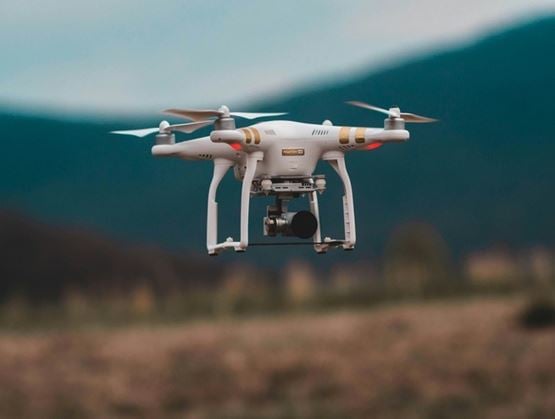
The rapid proliferation of drones has emerged as one of the most visible operational challenges of 2026. Low-cost, highly capable unmanned systems are being used for smuggling, surveillance and disruption near sensitive sites such as airports, prisons and critical infrastructure. Incidents across Europe and North America have highlighted gaps in airspace control below traditional aviation thresholds.
At the same time, drones are becoming valuable assets for law enforcement and border defence, supporting real-time surveillance, search and rescue operations and the monitoring of remote or high-risk areas at significantly lower cost and risk than manned patrols.
As a result, governments are investing not only in counter-UAV technologies, including detection, jamming and interception systems, but also in regulated, mission-specific drone capabilities that enhance situational awareness while maintaining control of increasingly crowded airspace.
Regulation is also evolving, with tighter controls on drone registration and operation. The challenge lies in protecting public spaces without restricting legitimate commercial and emergency uses, a balance that continues to test lawmakers and security agencies alike.
Domestic extremism remains a central concern
Alongside technological threats, domestic extremism continues to shape internal security priorities in 2026. Around Europe, 58 terrorist attacks were recorded in 14 EU Member States in 2024, with the majority linked to lone actors rather than organised groups. Political polarisation, social inequality and online radicalisation have sustained a high level of concern across Europe, the United States and parts of Asia. Security services are refining how they identify and respond to ideologically motivated violence while navigating sensitive questions around civil liberties.

Cooperation becomes a strategic necessity
One of the most consistent trends shaping 2026 is the deepening of interagency and international cooperation, which was highlighted during several conference sessions at Milipol Paris 2025 in November. Threats ranging from cybercrime to organised trafficking rarely stop at national borders, pushing governments to invest in shared intelligence platforms and joint task forces.
In Europe, proposals to strengthen Europol’s mandate and improve cross-border data sharing reflect this shift. Similar models are emerging elsewhere, linking customs, police, border control and cybersecurity agencies. Interoperability is increasingly embedded in national and regional security frameworks, particularly to support coordinated responses during large-scale crises and cross-border incidents.
Workforce transformation and skills pressure
Technology alone cannot deliver security without people able to deploy and manage it. In 2026, many homeland security agencies face significant recruitment and retention challenges as demand for specialised skills in AI, cyber, threat intel, data analysis and digital forensics is increasing, reshaping the internal security labor market.According to public sector workforce studies, competition with the private sector has intensified, driving new approaches to training, career development and international talent exchange.
This skills pressure is reshaping organisational cultures. Continuous training, multidisciplinary teams and closer collaboration with industry are becoming standard, reflecting the increasingly hybrid nature of internal security roles.
Geopolitical instability influences internal security
Finally, global geopolitical instability continues to exert indirect but powerful pressure on homeland security. Conflicts, climate stress and economic disruption are driving migration flows and fuelling organised crime. Internal security strategies now routinely integrate border management, humanitarian response and resilience planning.
In regions such as Europe’s southern borders and parts of Asia, climate-related disasters are also influencing security planning, linking emergency management with long-term stability. In 2026, internal security strategies will be increasingly informed by global risk forecasting and long-term threat assessment.
As these seven trends converge, they define a security environment that is complex, interconnected and constantly evolving. For professionals across the sector, understanding how technology, people and policy intersect has become essential. This is precisely where international platforms such as Milipol Paris play a critical role, offering visitors and exhibitors a space to explore solutions, share expertise and shape the future of internal security in a rapidly changing world.
Image credits:
Boliviainteligente - Unsplash
Jared Brashier - Unsplash
Viorel Vașadi - Unsplash