
Large Events Security: Protecting Leaders, Players & People

When the G7 gathered in Évian-les-Bains from 15 to 17 June 2026, the security equation was concentrated, sovereign and intensely layered. Heads of state and government, European Union leaders, invited partner countries and diplomatic delegations converged on a town whose geography is both an asset and a complication. Évian offers a controlled lakeside setting, but its proximity to Switzerland, its reliance on cross-border movement and its position between road, air and lacustrine routes required a security architecture extending far beyond the summit venue itself.
The summit concluded with leaders adopting nine declarations, including texts concerning certain ongoing conflicts, economic imbalances, digital and AI governance, critical minerals, health, international partnerships, drug trafficking and migrant smuggling. Yet beneath the political outcomes lay a second story: the operational choreography required to let diplomacy proceed while residents, frontier workers, businesses and visitors continued to move through a sensitive border region.
Évian’s Multi-environment Security Cordon
The G7 security plan, placed under the authority of the Prefect of Haute-Savoie, was designed as a multi-environment system involving internal security forces, the armed forces, intelligence services, civil protection bodies, emergency responders and local authorities. Its first layer was terrestrial. National Police secured summit sites and controlled access to regulated areas, with 7,160 police officers deployed for summit protection duties. Close protection for heads of state and government, as well as spouses, mobilised 200 National Police personnel, while delegation motorcades were covered by joint Police and Gendarmerie resources, including 460 motorcyclists.
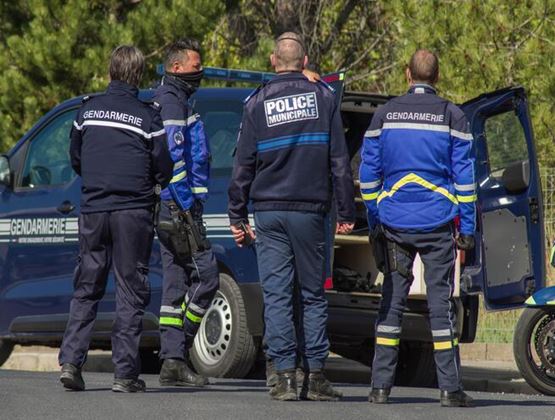
The Gendarmerie Nationale extended the protective mesh into the surrounding territory, covering more than 1,670 square kilometres across two departments. Its role was to hold traffic axes, monitor sensitive points and provide rapid intervention capacity beyond the host communes. Around 6,100 gendarmes were mobilised, supported by specialised intervention capabilities, aerial assets, drones and counter-drone systems. The armed forces added approximately 900 military personnel for land, lake and air security, including canine search teams, lake surveillance by boat and explosive ordnance support.
Évian’s lakefront setting made Lake Geneva a security domain in its own right. Gendarmerie nautical units operated in close cooperation with Swiss authorities, while navigation and water activities were restricted in a limited exclusion zone intended to protect the summit without unnecessarily disrupting wider leisure use or cross-border lake services. More than 30 boats from the National Police, Gendarmerie and Army engineering river brigade were positioned on the lake.
The air domain followed the same principle of proportional restriction. A temporary prohibited zone and two temporary regulated zones were created to enable a special air security arrangement, with French armed forces working with Swiss air forces. Annecy aerodrome and Geneva International Airport remained accessible, but access to the summit airspace was restricted, with particular attention paid to unauthorised drones.
Civil Protection, Borders and Continuity of Daily Life
Large diplomatic gatherings are often judged by what does not happen. The Évian plan therefore placed civil protection and emergency readiness alongside police and military control. Before the summit, 110 bomb disposal specialists, reinforced by military engineers, secured sites, water areas and lake infrastructure. The operation included 23 divers, 65 explosives search dog teams, including nine European reinforcement teams, 90 specialists in nuclear, radiological, biological and chemical risks, and 40 operational search personnel.
During the summit, intervention capacity remained permanently available through 10 response vehicles, including two with NRBC capability, six boats, road access posts, screening points and helicopter teams on standby as far as Annecy and Geneva. Around 1,000 civil security actors were mobilised, including professional and volunteer firefighters, approved civil security associations and military civil security rescuers. This was designed not only to protect delegations, but also to preserve the everyday emergency coverage of Haute-Savoie, normally supported by 380 firefighters on daily duty.
The border dimension was equally central. The Chablais region’s proximity to Switzerland required reinforced control of crossing points while maintaining the flow of local life, especially for cross-border workers. For the first time, France deployed the interministerial Rapid Border Intervention Force, involving the National Police, Gendarmerie and customs services. Border staffing rose from around 60 personnel per day in normal conditions to more than 830 at the peak of the event, including 205 under the rapid intervention force.
This balance between restriction and continuity is increasingly central to major-event security. The aim is no longer simply to build a perimeter, but to create an adaptable ecosystem in which access, transport, emergency response, international cooperation and public information are mutually reinforcing.
North America’s Tournament of Scale
If Évian represents the concentrated model, the FIFA World Cup 2026 represents the distributed one. The tournament runs from 11 June to 19 July, bringing 48 teams and 104 matches to 16 host cities across Canada, Mexico and the United States. FIFA has described the preparation effort as covering match organisation, team facilities, logistics, safety and security, broadcast, media and commercial operations.
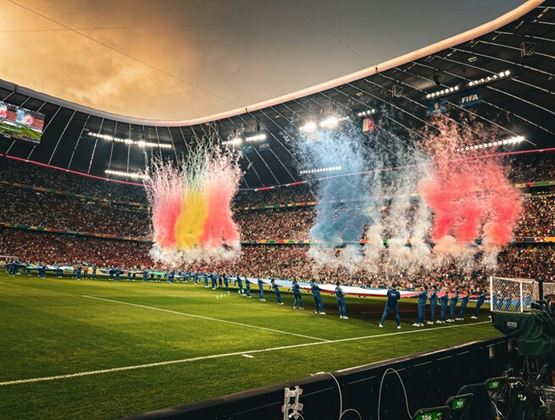
The security task is therefore less a single operation than a federation of operations. Canada is hosting 13 matches, seven in Vancouver and six in Toronto, and has announced up to C$145 million (€98 million) to support public safety and security. Federal authorities have linked the tournament to cooperation on border management, transport and security, while Shared Services Canada is working with the RCMP to provide secure and resilient connectivity at FIFA sites in Vancouver and Toronto.
In the United States, the security picture spans aviation, cyber resilience, stadium protection, local policing and emergency management. Security planning reportedly involves more than 400 law-enforcement agencies working with federal authorities and private security firms. CISA, the United States Cybersecurity and Infrastructure Security Agency, which sits within the US Department of Homeland Security, has said it is supporting host cities through full-scale exercises, security assessments and coordination with local, state and federal partners. It has also issued resources for large-scale events and reinforced “No Drone Zone” messaging around FIFA World Cup 2026 sites. TSA has developed a World Cup Security Playbook for travellers and has warned fans to prepare for screening rules before reaching airports and stadium cities.
Mexico’s planning has combined federal coordination, city-level mobility and security plans, airspace protection and trilateral cooperation. Mexico City alone announced 56,320 police officers for World Cup-related activities between 11 June and 19 July, with 9,194 officers and 923 vehicles assigned to the opening match and Zócalo events. Mexico has participated in high-level security meetings with the United States and Canada, while Mexico City authorities have presented a mobility and security plan built around unified protocols for stadiums, public spaces and celebration zones. Mexico has also established air surveillance and protection zones for the tournament.
Across both events, drones have emerged as a defining concern. In Évian, counter-drone systems were embedded in the air security plan. In North America, CISA’s no-drone guidance reflects the same anxiety at a larger scale, while World Cup planners have been working hard to counter drone risks across multiple jurisdictions. The threat is technically simple, publicly visible and operationally disruptive, making it a priority from the lakeside summit to football training grounds.
The comparison is instructive. The G7 required precision, discretion and layered protection around a narrow diplomatic footprint. The World Cup demands endurance, interoperability and crowd-management resilience across a continent. One concentrates risk around leaders and delegations; the other distributes it across fans, players, transport systems, host communities, and borders.
For the homeland security community, the lesson is not that one model is more demanding than the other. It is that major-event protection now depends on the same fundamentals at every scale: early planning, trusted information-sharing, civil protection capacity, cyber and airspace vigilance, proportionate public restrictions and respect for the daily rhythms of host communities. These are precisely the conversations that shape the international security agenda at Milipol Paris, where public authorities and industry meet to turn operational experience into future capability.
Images credits:
Jackmac34 - Pixabay
Johannes Hubner - Unsplash
Ev Pqk - Unsplash