
France’s ACMOSS and the Worldwide Shift in Critical Communications

Global Signals: France’s ACMOSS in the Context of Worldwide Network Modernisation
France is advancing a sovereign approach to critical communications through ACMOSS and the Réseau Radio du Futur, signalling a broader European shift towards resilient, interoperable networks for security forces. Comparable initiatives reflect shared operational and technological priorities.
France has placed critical communications at the centre of its national security modernisation strategy. Through the development of the Agence des communications mobiles opérationnelles de sécurité et de secours, known as ACMOSS, and the deployment of the Réseau Radio du Futur, the country is seeking to reinforce both operational effectiveness and technological sovereignty. This ambition aligns with wider European efforts to transition from legacy narrowband systems to broadband-enabled, mission critical communications infrastructures.
The French Ministry of the Interior has framed ACMOSS as a cornerstone of national resilience, designed to ensure that police, gendarmerie, fire and rescue services can rely on secure, robust and interoperable communications. The initiative responds to a dual imperative. On one hand, it addresses operational challenges exposed by major incidents requiring multi agency coordination. On the other, it reflects strategic concerns about dependence on foreign technologies in sensitive security domains.
France’s ACMOSS and the RRF Transformation
ACMOSS is tasked with delivering and managing the Réseau Radio du Futur (RRF), a next generation communications network intended to replace ageing systems such as ANTARES and RUBIS. Unlike traditional narrowband radio networks, the RRF is based on 4G and 5G technologies, enabling high data throughput, video transmission and real time situational awareness.
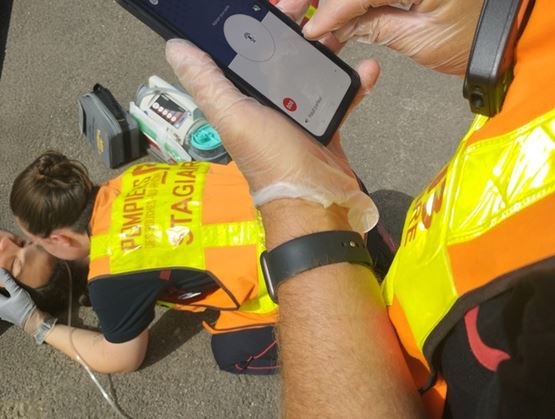
This shift is not purely technical. It represents a redefinition of how emergency and security services communicate in complex environments. The RRF is designed to support mission critical voice alongside data services, allowing responders to share images, geolocation data and operational intelligence instantly. According to the French authorities, this enhanced connectivity will improve coordination during crises ranging from terrorist incidents to natural disasters.
A defining feature of ACMOSS is its emphasis on sovereignty. The agency seeks to ensure that critical communications infrastructure remains under national control, reducing reliance on external providers. This includes careful selection of industrial partners and the integration of cybersecurity measures from the outset. The objective is to create a resilient ecosystem capable of withstanding both physical disruptions and cyber threats.
The timeline for the RRF reflects the scale of the undertaking. Deployment is expected to be gradual, with pilot phases and progressive integration of services. This phased approach allows for testing, adaptation and the incorporation of user feedback, ensuring that operational requirements remain central to the system’s evolution.
European Parallels in the United Kingdom and Germany
France’s strategy is mirrored by similar transformations across Europe. In the United Kingdom, the transition from the Airwave network to the Emergency Services Network has been one of the most closely watched programmes in the sector. Airwave, based on TETRA technology, has provided reliable voice communications for years. However, it lacks the broadband capabilities required for modern operations.
The Emergency Services Network aims to address this gap by leveraging commercial 4G infrastructure while ensuring priority and resilience for emergency users. The programme has faced delays and scrutiny, highlighting the complexity of migrating mission critical communications to broadband platforms. Nevertheless, the underlying objective remains consistent with France’s approach. Both countries seek to integrate voice and data into a unified system that enhances situational awareness and operational agility.
Germany offers another perspective through its BOS Digitalfunk network. Also based on TETRA, BOS Digitalfunk has been widely regarded as a stable and secure system for public safety communications. However, German authorities are exploring complementary broadband solutions to support data intensive applications. This hybrid approach reflects a cautious transition, balancing the reliability of existing systems with the capabilities of new technologies.
Across these cases, several common themes emerge. Interoperability is a central concern, particularly in cross border operations and European cooperation frameworks. Cybersecurity is equally critical, as networks become more complex and interconnected. Finally, user acceptance plays a decisive role. Emergency personnel must trust that new systems will perform reliably under pressure.
Beyond Europe: Global Developments and the Case of Qatar
Outside Europe, other countries are also investing in advanced communications systems tailored to their security needs. Qatar, for example, has undertaken significant upgrades to its public safety communications infrastructure in preparation for major international events and ongoing national security requirements.
The country has focused on integrating broadband capabilities into its communications framework, enabling high speed data exchange and enhanced coordination between agencies. These developments have been particularly visible in the context of large scale event security, where real time information sharing is essential. While differing in scale and context, Qatar’s efforts echo the broader global trend towards converged voice and data networks.
Internationally, the shift towards mission critical broadband is often accompanied by partnerships with industry leaders and the adoption of global standards such as 3GPP (3rd Generation Partnership Project). This ensures compatibility and facilitates innovation, while also raising questions about technological dependence and supply chain security. France’s emphasis on sovereignty through ACMOSS can be seen as a response to these challenges, positioning national control as a key component of resilience.
At the same time, the global landscape remains diverse. Some countries prioritise rapid adoption of commercial technologies, while others favour incremental upgrades to existing systems. The balance between innovation, reliability and sovereignty continues to shape national strategies.
A converging trajectory for critical communications
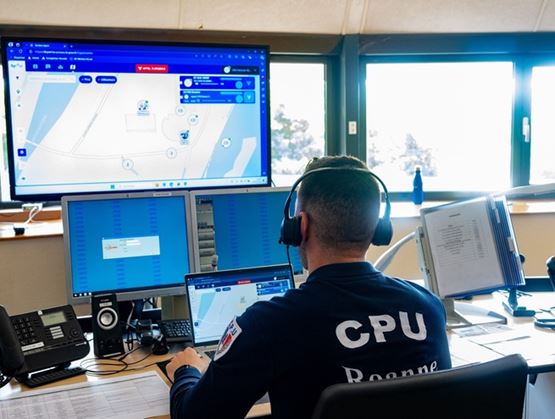
The evolution of critical communications systems reflects a broader transformation in security operations. As threats become more complex and dynamic, the ability to share information quickly and securely becomes indispensable. Networks such as the RRF, the Emergency Services Network and emerging broadband solutions illustrate a converging trajectory towards integrated, data rich environments.
The challenges ahead remain significant. Technical integration, cost management and user adoption all require sustained attention. As these systems mature, they are likely to feature prominently in international forums dedicated to security and defence technologies. Events such as Milipol Paris provide a platform for stakeholders to exchange insights, showcase innovations and explore collaborative solutions.
Image credits: ACMOSS