
Technology and Cooperation for Countering Drone Threats

The growing accessibility of unmanned aerial vehicles has altered the balance between threat and defence in the modern security landscape. Small, relatively inexpensive drones can now perform surveillance, deliver payloads, or disrupt infrastructure, challenging conventional air defence systems originally designed for larger and more costly targets. As a result, governments and defence industries are focusing on new approaches to counter-drone technology that combine affordability, adaptability and rapid deployment.
Recent initiatives in Europe illustrate the urgency of this technological shift. In February 2026, five major European defence powers announced a joint effort to accelerate the development of affordable counter-drone systems. The programme aims to stimulate industrial collaboration while reducing the cost disparity between relatively cheap unmanned systems and the expensive interceptors traditionally used to destroy them.
A Changing Aerial Threat Landscape
Unmanned aerial systems have become a defining feature of contemporary security environments. Their flexibility and declining cost have allowed a wide range of actors to deploy them for reconnaissance, disruption or targeted attacks. Commercial drones in particular are widely available, easy to modify and capable of operating at low altitude, making them difficult to detect with conventional radar systems.
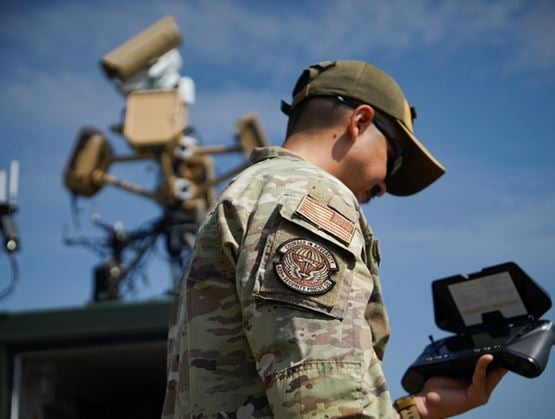
In response, the European Group of Five, comprising France, Germany, Italy, Poland and the United Kingdom, launched a collaborative framework known as Low-Cost Effectors and Autonomous Platforms, or LEAP. The initiative focuses on developing a new generation of affordable defensive technologies capable of intercepting drones and other aerial threats while reducing reliance on expensive conventional weapons.
Officials involved in the programme emphasise that the pace of technological change demands a faster and more collaborative approach to defence innovation. According to statements made at the launch of the initiative, unmanned systems are evolving rapidly, incorporating advanced autonomy and artificial intelligence capabilities that require equally adaptable countermeasures.
Emerging Counter-drone Technologies
The current generation of counter-drone systems reflects a broad spectrum of technological approaches. These include electronic warfare tools that disrupt communications between drones and their operators, directed energy systems that disable electronics, and kinetic interceptors designed specifically for small aerial targets.
Electronic countermeasures remain one of the most widely used options. Systems such as the Centauros counter-UAV platform developed by the Hellenic Aerospace Industry employ high-power radio-frequency jamming to interrupt drone control and navigation signals. By targeting specific communication frequencies, such systems can force unmanned aircraft to lose control or return to their launch point without the need for conventional missiles.
Detection capabilities are equally critical. Many modern counter-drone systems rely on a layered combination of radar, optical sensors and radio-frequency monitoring to identify small aerial targets. Centauros, for example, integrates long-range passive detection technology capable of identifying unmanned aircraft at distances of up to 150 kilometres while tracking multiple targets simultaneously.
Directed energy weapons are also attracting significant attention within defence research programmes. High-power microwave systems are designed to emit bursts of electromagnetic energy that disrupt or destroy electronic circuits inside drones. The United Kingdom’s RapidDestroyer demonstrator has shown the potential of this approach by disabling large numbers of drones during trials, highlighting its suitability against swarm-type threats.
These technologies are often integrated into broader air defence networks that combine sensors, command systems and multiple countermeasure options. Such layered architectures allow operators to select the most appropriate response depending on the nature of the threat, whether that involves jamming communications, intercepting the drone physically or neutralising it with directed energy.
Industrial Collaboration and Cost Efficiency
Cost efficiency has become a central objective in the development of modern counter-drone capabilities. Defence planners increasingly emphasise the need to match the cost of defensive measures to the relatively low cost of many unmanned aerial systems.
The LEAP initiative seeks to address this challenge by encouraging collaboration between major defence manufacturers and smaller technology firms. The programme prioritises rapid development cycles and scalable manufacturing methods, enabling new systems to move from concept to operational deployment more quickly than traditional procurement processes allow. Such industrial cooperation also reflects a broader trend within the European defence sector. By pooling resources and expertise, participating countries aim to strengthen technological autonomy while ensuring that innovative solutions reach operational forces without excessive delays.
Artificial intelligence is expected to play a significant role in future counter-drone systems. Autonomous tracking algorithms can analyse sensor data in real time, identifying potential threats and assisting operators in selecting appropriate responses. In some cases, automated defensive systems may even engage hostile drones with minimal human intervention, improving response times during high-intensity scenarios.
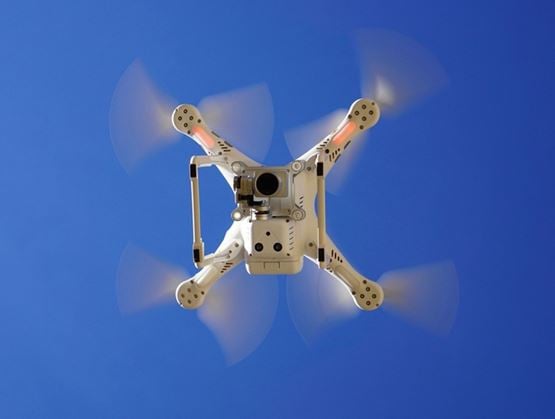
At the same time, experts emphasise that technological progress must be accompanied by regulatory and operational frameworks that ensure safe deployment. Counter-drone systems operating near urban areas or critical infrastructure must minimise the risk of unintended interference with civilian communications or electronics.
Several Milipol Paris exhibitors offer counter-drone technologies, reflecting the event’s role as a meeting point between homeland security authorities and industrial innovators. Among them, ParaZero Technologies develops interception systems designed to capture rogue drones using nets deployed from handheld launchers or autonomous platforms. French firm HGH specialises in passive electro-optical detection solutions such as the GAIA Air system, which identifies drones using infrared sensors without emitting signals. Alta Ares focuses on artificial intelligence driven tracking tools, with its Pixel Lock software analysing visual data to detect and follow unmanned aircraft in complex environments. Meanwhile, Thales provides integrated counter-UAS architectures combining radar, sensors and electronic countermeasures to protect sensitive sites and large events. Collectively, these technologies illustrate the diverse approaches emerging within the counter-drone sector and showcase emerging solutions that address rapidly changing threats.
Image credits:
Pixabay
U.S. European Command